Digital Element Announces NAT Detector — Industry’s New Standard for Accurate IP Geolocation and Risk Intelligence.

Preventing Disaster With Effective Data Loss Prevention Software

For businesses going through digital transformation, managing the increased volume and complexity of data — coupled with the risk of cyber threats and human error — can quickly become an additional overhead that serves only to burden your operations team.

Enter data loss prevention (DLP). DLP software plays a crucial role in safeguarding businesses from both internal and external threats by monitoring, detecting, and blocking data while in use, in motion, and at rest.

Understanding data loss prevention (DLP)

Data Loss Prevention (DLP) is a strategy that prevents sensitive or critical information from leaking outside of a corporate network.

With DLP, engineering and operations teams can enforce data security policies, ensure regulatory compliance, and provide visibility into data movement, leading to enhanced overall data security and integrity.

Organizations can implement DLP through software that monitors and controls endpoint activities, filters data streams on corporate networks, and monitors data in the cloud to protect data at rest, in motion, and in use.

DLP software identifies confidential data, tracks that data as it moves through and out of the enterprise, and prevents unauthorized disclosure of data by creating and enforcing disclosure policies. These policies define critical data and outline the controls to enforce, such as alerting, encrypting, and other protective actions.

Data loss prevention tools come in all shapes and sizes. Some of them are focused on things like endpoint security and email protection, while others take on advanced network safety using tools like IP geolocation and VPN detection. The specific type of DLP software your company needs will depend on the nature and size of your business, as well as the setup of your network architecture.

Types of data loss prevention software

Each type of DLP software plays a unique role in a comprehensive data protection strategy, which is why many organizations use a combination of different types to cover all their bases against expensive cybercrime:

  • Network DLP: These solutions are typically installed at the network perimeter, such as at the exit point of a corporate network, and are used to monitor and control data in motion. They analyze network traffic to detect valuable data sent in violation of information security policies.
  • Storage DLP: Also known as Data at Rest DLP, these solutions identify and secure data stored in data centers, cloud storage, file servers, databases, and other storage devices. They ensure that stored data is kept safe from unauthorized access and breaches.
  • Endpoint DLP: Organizations install these solutions on end-user devices such as computers, laptops, and mobile devices. Endpoint DLPs control data in use and monitor transferred data. They can also control data uploads and prevent malicious activities.
  • Cloud DLP: Designed to protect data stored or shared in the cloud, organizations can integrate these solutions with cloud-based services to monitor and control data access and movement, ensuring compliance with regulations like HIPAA and GDPR.
  • Email DLP: These solutions monitor and control data sent via email. Organizations use email DLP to prevent sensitive information from being shared with unauthorized individuals, both within and outside the organization.
  • Content-aware DLP: These solutions are capable of inspecting and contextualizing the content being sent or accessed. They can identify data based on pre-defined policies and take action to prevent unauthorized sharing.

How to choose the right data loss prevention software

Choosing the right data loss prevention (DLP) software is a critical decision that can significantly impact the security of your organization’s data. Here are some factors to consider when choosing the right DLP tool:

  • Data architecture: Once you know what data you need to protect, you can look for a DLP solution that offers features tailored to protect that data. For instance, Safetica offers templated data classification, which can be useful if you have specific types of data you need to protect.
  • Coverage: The DLP solution should cover all potential data leakage points, including email, web, cloud services, network, and endpoint. For example, Forcepoint DLP offers unified data protection coverage across all these channels.
  • Ease of use: The DLP solution should be user-friendly and not require extensive technical expertise to operate. It should offer intuitive interfaces and easy-to-understand reports. ManageEngine Endpoint DLP Plus, for instance, is designed for user dexterity and precision, making it easy to configure and deploy policies.
  • Policy management: The ability to create, manage, and enforce policies is a crucial feature of a DLP solution. The software should allow you to easily tailor policies to match your organization’s needs. For example, NinjaOne Backup offers automated backup policies users can customize based on their requirements.
  • Integration: The DLP solution should integrate well with other security and IT systems in your organization. This can help streamline your security operations and provide a more holistic view of your security posture.
  • Scalability: The DLP solution should be able to scale as your organization grows. It should be able to handle an increasing amount of data and a number of users without performance issues.
  • Vendor reputation: Consider the reputation of the DLP solution’s vendor. Look at reviews and testimonials from other customers, and consider the vendor’s history and experience in the field. Also, consider the level of support the vendor provides. Do they offer 24/7 support? What are their response times like? Can they provide references?
  • Pricing: Finally, consider the cost of the DLP solution. This includes not only the upfront cost but also any ongoing costs for maintenance, support, and updates. Keep in mind the most expensive solution is not always the best one for your needs. DLP solutions don’t usually provide pricing information on their websites, so you would need to contact them directly for a quote.

Digital Element: Your trusted intelligence solution for data loss prevention

Choosing the right data loss prevention solution is crucial for safeguarding your organization’s data. Factors such as data architecture, coverage, ease of use, policy management, integration, scalability, vendor reputation, and pricing play a critical role in this decision.

While there are several robust DLP solutions on the market, Digital Element has a unique approach to data protection and is one of the few that uses IP geolocation to safeguard against data loss.

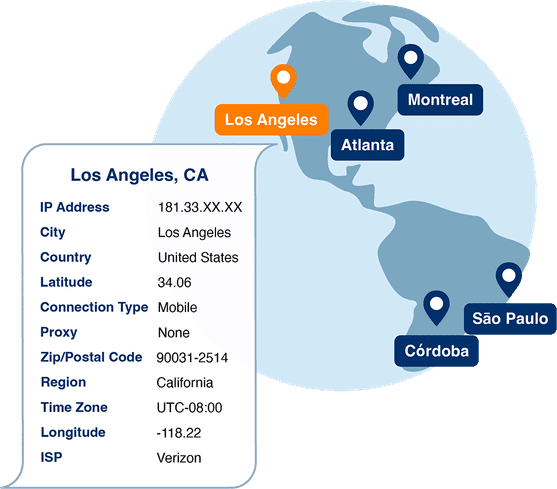
Digital Element is a leading provider of IP Intelligence and geolocation solutions. Our NetAcuity platform provides the most detailed, hyperlocal dataset available worldwide today that complies with the highest standards of end-user privacy.

Key features:

  • Hyperlocal IP geolocation: Provides detailed and accurate geographic information.
  • Proxy data: Identifies the use of different types of proxy servers to ensure data integrity.
  • Mobile carrier identification: Identifies mobile carrier data for better mobile targeting and prevention of fraud.

Looking for a cybersecurity solution? Try Digital Element today

Need help isolating specific malicious actors by location or discovering the source of a data breach? Enhance your cybersecurity strategy today with Digital Element.

Why Streaming Media Companies Should Know and Care About Residential Proxy Networks

This month commemorates the 20th anniversary of Cybersecurity Awareness Month, providing a valuable occasion to spotlight the risks confronting businesses and individuals in their digital endeavors. Initiated in 2004 through a partnership between the Cybersecurity and Infrastructure Security Agency (CISA) and the National Cybersecurity Alliance (NCA), Cybersecurity Month aims to inform and educate both businesses and individuals about the prevailing and emerging online threats they may encounter.

Over the past 18 months, Digital Element has noted a new set of threats perpetrated by bad actors who have been leveraging residential proxy IP networks for nefarious reasons.

Streaming media companies have been severely affected by this burgeoning industry. Numerous companies offer to make thousands, even tens of thousands of legitimate residential IPs available to parties looking to maintain privacy and anonymity online, and at very little cost. Should this matter to streaming media companies?

The answer is yes. Most streaming media companies are well aware that hundreds of VPN service providers offer use of their VPNs to consumers for the express purpose of circumventing content geo-restrictions. Many have engaged partners, such as Digital Element, to detect and block traffic that stems from a VPN.

But there is a new threat emerging: distributed VPNs. These are VPNs that purchase residential IP addresses from residential IP proxy networks in order to evade detection.

What is a Residential Proxy IP Network?

Residential Proxy IP networks are networks that use the IP addresses of consumers who sign up for any number of apps that pay them to share their bandwidth. Those apps become gateways for other clients of the app provider.

Put another way, residential proxy networks enable consumers with residential internet access to “sublet” their IP address to residential IP proxy networks, enabling their subscribers’ internet traffic to appear as if it is originating from the subleted IP address.

The networks rely on multiple strategies to build their pool of available residential IPs to proxy. Consumers play an important role in residential proxy IP networks, often unwittingly. The proxy networks tell consumers that by sharing their internet bandwidth, they can earn easy money. To get paid, all the consumer needs to do is install an app — Pawns.app, Honeygain, Peer2profit, Packet Stream to name a few — and start collecting passive income.

Some residential IP proxy networks deploy additional strategies to build their pool of IP addresses, such as providing an SDK to app developers who want to monetize their apps; convincing the provider of a browser extension to include their code; and leveraging  botnet to obtain residential IPs.

Once these networks have amassed a pool of residential IP addresses they then offer them to other entities that need access to them at scale (such as a VPN provider that needs to circumvent a streaming media company’s VPN-detection tool).

While residential proxy IP networks have been available for some time, what is changing is the exponential growth in both the number of networks and their scale. Certain proxy networks boast access to hundreds of thousands of residential IP addresses, which are made available to anyone willing to pay. This escalation demonstrates the need for heightened vigilance and robust security measures to combat the risks associated with these networks.

Digital Rights Management (DRM)

Residential IP proxy networks pose a major challenge for streaming media companies that need to enforce access restrictions that are geo-location based. Personal VPN usage has been growing over the past few years, especially as consumers seek to circumvent the geo-restrictions imposed by streaming media companies.

Currently, streaming media platforms can leverage Digital Element’s VPN-proxy database to stop illegitimate traffic, but as mentioned above, residential IP proxy networks are the new frontier, allowing users to circumvent the streaming media company’s ability to block access to content. A VPN that has a residential IP proxy in one country can allow a user in another country to look like a legitimate user in the destination country.

Unfortunately, streaming media platforms can’t opt to block every IP address associated with a residential IP proxy network, as their actual customers may be the ones sharing their bandwidth with those networks. Consequently, categorically blocking such IP addresses may result in blocking paying customers.

How Digital Element Detects Residential IP Proxies

While there is not a simple solution, the first step is understanding how much of your incoming traffic is proxied residential IPs. Digital Element can provide you with this understanding by uncovering IP addresses that are linked to, or have history of, association with residential IP proxy networks or VPNs. With this information, streaming media providers can make informed decisions as they address the use of resi-proxies within their subscriber base.

IP addresses contain a lot of contextual data that help us predict the legitimacy of a user behind a device. That contextual data includes attributes such as activity level and IP stability. We know, for instance, that proxied IP addresses are shared by clients all over the world, so they are likely to be seen in multiple locations. That’s an important insight for clients; if an IP address remains consistently associated with a specific location for an extended period, it is less likely to be a proxy.

IP address intelligence data, such as activity levels and stability, can’t decipher between legitimate and illegitimate users alone, but it can provide much needed context that organizations need to make smart decisions to protect access to their content.

Digital Element’s Nodify Threat Intelligence solution provides critical contextual information to help identify inbound or outbound traffic tied to residential IP proxy networks, VPNs, and darknets.This insight helps streaming media companies protect that content from pirates and other people who don’t have access rights.

Focus on Residential IP Proxy Network Traffic this Cybersecurity Awareness Month

Cybercriminals, known for their continual ingenuity, will continue to devise novel ways to circumvent the streaming media industry’s licensing and content access protections. During this Cybersecurity Awareness Month, let’s make a deliberate effort to explore these cybercriminals’ latest tactics and tools amidst our hectic routines.

If you’d like to learn more about Nodify and residential IP proxy traffic detection, visit https://www.digitalelement.com/nodify/or reach out to sales@digitalenvoy.com

How Residential Proxy Networks Affect Adtech

This month marks the 20th anniversary of Cybersecurity Awareness Month, and is an opportunity to bring attention to the threats that businesses and people face as they go about their digital lives. Launched in 2004, as a collaborative effort between the Cybersecurity and Infrastructure Security Agency (CISA) and the National Cybersecurity Alliance (NCA), Cybersecurity Month seeks to educate both businesses and people about the current and emerging threats they may encounter online.

Over the past 18 months a new threat vector to digital advertisers has emerged: residential IP proxy networks, and nefarious actors have been leveraging them to bilk advertisers of their budgets. 

What is a residential IP proxy network, and how do they affect marketers who target users as they go about their digital lives? Let’s dig into this critical topic.

Google “residential proxy IP” and you will quickly realize there is a burgeoning industry in the after-market trade of home IP addresses for purposes other than individual home use. Numerous companies offer to make thousands, even tens of thousands of legitimate residential IPs available to parties looking to maintain privacy and anonymity online, and at very little cost. Should this matter to you?

The short answer is yes for all marketers, SSPs and DSPs keen to ensure their ads are seen by real home users and not proxies. But residential IP proxies are difficult to detect, as they “look” just like legitimate home users in the marketer’s targeted geography. This is why it’s important to engage a partner that makes the necessary investments to stay ahead of the risks such networks create.  

Let’s discuss what residential IP proxy networks are, and why they should be on your radar. 

What is a Residential IP Proxy Network?

Residential Proxy IP networks are networks that use the IP addresses of consumers who sign up for any number of apps that pay them to share their internet bandwidth. Those apps become gateways for other clients of the app provider. Put another way, residential proxy networks enable consumers with residential internet access to “sublet” their IP address to residential IP proxy network subscribers, enabling their internet traffic to appear as if it is originating from the sublet IP address. Home computers, laptops, smartphones and tablets can all act as intermediary servers.

Obtaining Residential IPs for a Proxy Network

If a residential IP proxy network can sell thousands upon thousands of IP addresses to its clients, where and how do they obtain them? The networks rely on multiple strategies to build their pool of available residential IPs to proxy:

  • Consumers. Consumers play an important role in residential proxy IP networks, often unwittingly. The proxy networks tell consumers that by sharing their internet bandwidth, they can earn easy money. To get paid, all the consumer needs to do is install an app — Pawns.app, Honeygain, Peer2profit, PacketStream to name a few — and start collecting passive income. The amount of money they earn isn’t huge; payments range from $.20 per GB per shared data to $75 per month. Still, it’s easy money.
  • SDKs. Some residential IP proxy networks will provide an SDK to app developers who want to monetize their apps. Those SDKs will use the IP addresses associated with the devices on which that SDK is installed and make them available as part of their network.
  • Browser extensions. Some networks are able to convince the provider of a browser extension to include their code within that extension. Like the SDK example above, the IP addresses of the users who install that extension will be included in the residential IP proxy network.
  • Botnets. Some nefarious players leverage a botnet to obtain residential IP addresses.

While residential proxy IP networks have been available for some time, what is changing is the exponential growth in both the number of networks and their scale. Certain proxy networks boast access to hundreds of thousands of residential IP addresses, which are made available to anyone willing to pay. This escalation demonstrates the need for heightened vigilance and robust security measures to combat the risks associated with these networks.

How Residential IP Proxy Networks Harms the Digital Ad-Tech Sector

Once residential IP proxy networks have amassed a pool of IP addresses, they allow other entities to purchase residential IP addresses at scale, and from any region desired. Granted, there are some legitimate uses for these networks. Let’s say a CPG advertiser launches an advertising campaign in multiple countries, and wants to ensure that the ads render appropriately in each market. Residential IP proxies will enable that marketer to spot check ads in every location. 

But these networks also pose a significant danger to the ad-tech sector in that what looks like a residential user in an appropriate location may actually be a bot or malicious actor hiding behind a proxy. We have also seen evidence that bad actors leverage residential IP proxy networks to commit ad fraud, such as disguising a bot that has been programmed to click on ads, watch videos and even fill out surveys in order to earn commissions advertisers pay on campaign KPIs.

Another challenge Digital Element sees relates to the supply side. Many websites purchase traffic in order to increase the CPMs they can earn for their impressions. Residential IP proxy networks aid in fraudulent advertising by inflating or misrepresenting audience size, demographics and locations of users. 

On the demand side, similar challenges are encountered when advertisers experience artificially low conversion rates or artificially high impressions, which results in inefficient spending and poor campaign results.

SSPs
  • Do you know how valuable the traffic coming to your publishers is? 
  • Which of your publishers have high residential IP proxy network traffic?
  • How frequent is such traffic encountered?  
  • What is the lost value of this potentially fraudulent traffic?
DSPs
  • Do you know which ads are being displayed in front of real people?
  • Have you investigated the impact that residential IP proxy network traffic has on conversion rates?
  • What is the lost value of this potentially fraudulent traffic? 

How Digital Element Detects Residential IP Proxies

Digital Element devotes tremendous resources to maintaining the most accurate and meaningful IP geolocation and Proxy and VPN intelligence for our customers. Included in that is our ongoing focus on emergent technologies, such as residential proxy networks, to ensure our customers can depend on us not only for reliable geolocation data, but also insights regarding important shifts that could impact your business.

While there is not a simple solution, the first step is understanding how much of your incoming traffic is proxied to residential IPs. Digital Element can provide you with this understanding by uncovering IP addresses that are linked to, or have a history of, association with residential IP proxy networks or VPNs. 

IP addresses also contain a lot of contextual data that help us predict the legitimacy of a user behind a device. That contextual data includes attributes such as activity level and IP stability. We know, for instance, that proxied IP addresses are shared by clients all over the world, so they are likely to be seen in multiple locations. That’s an important insight; if an IP address remains consistently associated with a specific location for an extended period, it is less likely to be a proxy. 

IP address intelligence data, such as activity levels and stability, can’t decipher between legitimate and illegitimate users alone, but it can provide much-needed context that organizations need to make smart decisions to protect their advertising budgets.

Digital Element’s Nodify Threat Intelligence solution provides critical contextual information to help identify inbound or outbound traffic tied to VPNs, proxies, or a darknet. In turn, businesses are enabled with powerful insights that help them protect against nefarious actors while reducing risk and cost.

Focus on Residential IP Proxy Network Traffic this Cybersecurity Awareness Month

Cyber criminals are highly creative people who constantly innovate new ways to steal from innocent consumers and companies. Cybersecurity Awareness Month is a good time to take time out of busy schedules to do a deep dive on the cybercriminal’s newest tools.

If you’d like to learn more about Nodify and residential IP proxy traffic detection, visit https://www.digitalelement.com/nodify/ or reach out to sales@digitalenvoy.com 

The Definitive Guide to Understanding IP Addresses and VPNs and Implications for Businesses

IP addresses sit at the foundation of nearly every digital business decision, yet they are also one of the most misunderstood components of the internet. As VPN usage, privacy relays, and anonymization services continue to grow, organizations are under increasing pressure to understand what an IP address really represents, how trustworthy it is, and what risks or opportunities it introduces by use case.

For security teams, this may mean distinguishing a benign corporate VPN from a risky anonymizer. For media, ecommerce, and compliance teams, it can mean determining whether traffic is coming from a legitimate user, a privacy relay, or a commercial VPN endpoint that could undermine licensing, fraud prevention, or regional enforcement.

To help businesses navigate this complexity, Digital Element created The Definitive Guide to Understanding IP Addresses and VPNs and Implications for Businesses, a comprehensive white paper designed to establish a practical, business-ready understanding of IP address intelligence and IP geolocation.

Why Understanding IP Addresses & VPNs Matters for Business

Most people are familiar with IP addresses and the role they play in connecting devices to networks. Many organizations already rely on IP address intelligence to support day-to-day operations, whether that’s targeted advertising, cybersecurity enforcement, fraud prevention, or compliance with global licensing and regulatory requirements.

What’s far less understood is how different types of IP addresses behave, how VPNs and privacy technologies complicate attribution, and how to interpret IP signals accurately without overblocking or introducing unnecessary risk.

That’s exactly why subject matter experts across Digital Element collaborated to develop an authoritative resource that demystifies the IP address space and explains how businesses can apply IP intelligence responsibly and effectively.

What This White Paper Helps You Understand

The Digital Element white paper starts at the very beginning, in the origins of the internet, and builds toward modern challenges facing enterprises today. Along the way, it explains:

  • How IP addresses are created, assigned, and managed globally
  • The differences between IP address types and accuracy levels
  • How VPNs, proxies, and privacy relays affect IP-based decisioning
  • Where IP geolocation data is reliable and where it has limitations
  • What signals separate privacy relays from commercial VPN endpoints?
  • How can we differentiate legitimate corporate VPN usage from risky anonymizers?
  • Can IP intelligence support enforcement without harming user experience?

Chapter Breakdown: What You’ll Learn

Chapter 1: Introduction to IP Addresses

This chapter explores the origins of IP addresses, why they were created, and how they evolved alongside the internet. It defines the many types of IP addresses in use today and clarifies commonly misunderstood concepts such as the differences between static, fixed, and dynamic IPs.


Chapter 2: The Evolution of IP Geolocation Data

Here, the paper examines how IP geolocation developed and how IP address allocation changed as the internet scaled globally. It explains the impact of IoT growth, IPv4 exhaustion, and the introduction of IPv6, along with critical technologies like NAT and CGNAT that affect address stability and interpretation.


Chapter 3: IP Geolocation Reliability and Vulnerabilities

This chapter looks closely at the strengths and limitations of IP geolocation data. It explores where inaccuracies and vulnerabilities arise, and how Digital Element addresses these challenges through continuous data refinement and contextual intelligence.


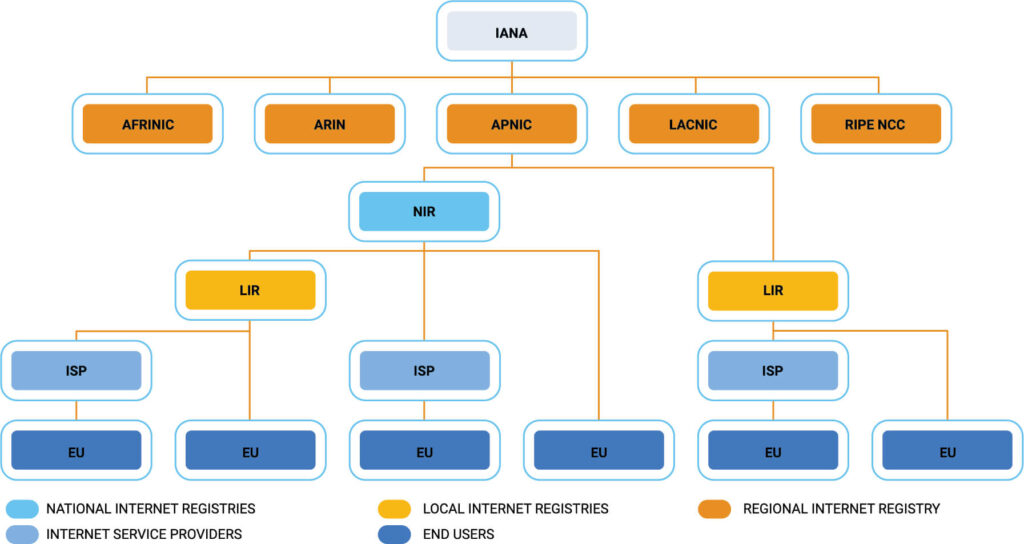
Chapter 4: How IP Addresses Are Allocated

Readers gain insight into how IP blocks are assigned to ISPs and enterprises worldwide, why allocation strategies differ, and how these decisions influence IP stability. The chapter also explains how Digital Element leverages allocation knowledge to add meaningful context to IP address intelligence.


Chapter 5: The VPN and Proxy Landscape

As VPN adoption accelerates, this chapter provides a clear breakdown of proxies, VPNs, darknets, and residential IP services. It explains why security and compliance teams need to differentiate between benign corporate VPN traffic and high-risk anonymization services, and how IP intelligence contributes to that assessment.


Chapter 6: Parting Thoughts and Emerging Trends

The final chapter highlights key trends shaping the future of IP geolocation, including 5G adoption, IPv6 expansion, IoT growth, and the continued rise of VPN and privacy technologies.

Why Download the Digital Element IP Geolocation White Paper

Whether you’re responsible for cybersecurity, fraud prevention, advertising performance, or regulatory compliance, understanding IP addresses and VPN behavior is no longer optional.

This white paper equips you with the knowledge needed to:

  • Evaluate IP-based risk more accurately
  • Understand how VPNs and privacy relays affect IP signals
  • Make informed decisions without overblocking legitimate users
  • Apply IP geolocation responsibly across business use cases

If you have questions about IP intelligence, VPN detection, or how Digital Element supports enterprise use cases, contact our team, we’re happy to help.

Download the Guide Now

Why Cybersecurity Companies Should Know and Care About Residential Proxy Networks

An emerging threat that has grown to an alarming degree over the past 18 months is residential IP proxy networks.

Numerous networks offer to make thousands, even tens of thousands of legitimate residential IPs available to parties seeking anonymity online, and at very little cost. Should this matter to you?

The short answer is yes, as players who use these proxies may be doing so in order to appear like “customers” who attempt to access your site or apps, but are bots or bad actors in disguise.

What is a Residential Proxy IP Network?

Residential Proxy IP networks are networks that use the IP addresses of consumers who sign up for any number of apps that pay them to share their internet bandwidth. Those apps become gateways for other clients of the app provider.

Put another way, residential proxy networks enable consumers with residential internet access to “sublet” their IP address to residential IP proxy network subscribers, enabling their internet traffic to appear as if it is originating from the sublet IP address.

These resi-proxy networks allow entities to purchase residential proxy IPs at scale, from any region desired, thereby posing a threat  to all companies with gated web properties. What looks like a residential user in an appropriate location may actually be a bot or malicious actor hiding behind a proxy.

We have also seen evidence that bad actors leverage residential IP proxy networks to commit ad fraud, gift card schemes, access content that’s restricted by geo-location, as well as crawl government and other websites searching for PII data, such as Social Security numbers or other government ID numbers.

While residential proxy IP networks have been available for some time, what is changing is the exponential growth in both the number of networks and their scale. Certain proxy networks boast access to hundreds of thousands of residential IP addresses, which are made available to anyone willing to pay. This escalation demonstrates the need for heightened vigilance and robust security measures to combat the risks associated with these networks.

Building a Pool of Residential IP Proxies

How do residential IP proxy networks obtain those thousands of IP addresses? The networks rely on multiple strategies, such as providing an SDK to app developers who want to monetize their apps, or convincing the provider of a browser extension to include their code. They can also leverage a botnet to obtain residential IPs.

Consumers also play an important role in residential proxy IP networks, often unwittingly. The proxy networks tell consumers that by sharing their internet bandwidth, they can earn easy money. To get paid, all the consumer needs to do is install an app — Pawns.app, Honeygain, Peer2profit, PacketStream to name a few — and start collecting passive income. The amount of money they earn isn’t huge; payments range from $0.20 per GB per shared data to $75 per month. Still, it’s easy money.

The networks inform consumers that their Internet will be shared, and some, such as Honeygain, verify the use cases of its clients. Others, such as 911 S5, offer free VPN services to consumers, and harvest their IP addresses with their consent.

Consumers have no way of knowing who uses their IP address, and to what end. They are just left to trust the service. Some of the apps promise that the consumer’s data will only be sold to “credible” companies that use it for verified use cases, such as competitive analysis. But this still exposes consumers to risk. A bad actor may use their IP addresses to engage in DDoS or other nefarious attacks, resulting in a permanent ban from some sites.

This isn’t a theoretical risk. We know that residential proxies have been used in a range of crimes, including ad fraud and DDoS attacks. In the summer of 2022, the FBI seized the website Rsocks.net and shut down a botnet that engaged in malicious activity with the help of a residential proxy network.

Dangers Residential IP Proxy Networks Pose to Security Teams

Every organization has multiple layers of security, including web application firewalls (WAFs) and content delivery networks (CDNs). Unfortunately, the proliferation of residential proxy networks means these tools have a significant blind spot that must be addressed.

A WAF protects your web applications by monitoring, filtering, and blocking malicious HTTP/S traffic traveling to a web application, and prevents unauthorized data from leaving the application. It does this by adhering to a set of policies, including context around the IP address, that help determine which traffic is malicious and which is safe.

If for instance, corporate security policy mandates that all non-residential IP addresses, as well as addresses from a specific geolocation be blocked, the firewall will block all traffic that matches that criteria.

If, however, the traffic is residential and has a geo-location that is permissible, it will be deemed legitimate. Today, however, those two data points are no longer sufficient, and security teams need a lot more context around IP addresses to understand their incoming traffic.

But while WAFs and CDNs can be deployed to protect organizations against things like scraping and DDoS attacks, they can be tricked into providing access to your network if the attackers are using the services of a residential proxy network. And in case you’re wondering, these residential proxy services aren’t very expensive to use.

How Digital Element Detects Residential IP Proxies

Digital Element devotes tremendous resources to maintaining the most accurate and meaningful IP geolocation and Proxy/VPN data for our customers. Included in that is our ongoing focus on emergent technologies, such as residential proxy networks, to ensure our customers can depend on us not only for reliable geolocation data, but also insights regarding important shifts that could impact your business.

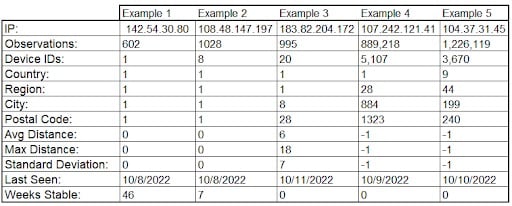
IP addresses contain a lot of contextual data that help us predict the legitimacy of a user behind a device. That contextual data includes attributes such as activity level and IP stability. We know, for instance, that proxied IP addresses are shared by clients all over the world, so they are likely to be seen in multiple locations. That’s an important insight for clients; if an IP address remains consistently associated with a specific location for an extended period, it is less likely to be a proxy.

IP address intelligence data, such as activity levels and stability, can’t decipher between legitimate and illegitimate users alone, but it can provide much needed context that organizations can use to make smart decisions to protect their advertising budgets and corporate data.

Digital Element’s Nodify Threat Intelligence solution provides critical contextual information to help identify inbound or outbound traffic tied to VPNs, proxies, or a darknet. In turn businesses are enabled with powerful insights that help them protect against nefarious actors while reducing risk and cost.

Focus on Residential IP Proxy Network Traffic

As a cybersecurity professional, you’re well aware of the cybercriminal’s astute skills and motivation to innovate new methods to find their way into corporate systems so they can steal data. As such, it’s a good time to take time out of busy schedules to do a deep dive on the cybercriminal’s newest tools.

If you’d like to learn more about Nodify and residential IP proxy traffic detection, visit https://www.digitalelement.com/nodify/ or reach out to sales@digitalenvoy.com

How To Understand The Tricky Science Behind IP Geolocation

IP geolocation is a subject that is often misunderstood.

Generally, people understand that it involves mapping IP addresses of internet-connected devices to a geographic location, but the nuances behind accuracy, coverage, granularity, and validation can be confusing.

In IP geolocation, validation refers to cross-checking inferred IP location against real-world observational signals to assess confidence and correct location assignments over time.

In this post, we break down the science behind IP geolocation accuracy, explain how validated observations improve confidence at the city and postal code level, and demonstrate why bi-directional accuracy matters for teams that rely on location data to perform at scale.

Why City-Level Accuracy Matters in IP Targeting

Let’s say you’re a marketer targeting Atlanta, Georgia for a programmatic or CTV campaign. Are you trying to reach only Atlanta proper, or the broader Atlanta metropolitan area, including suburbs where the majority of the population actually resides?

In most real-world use cases, success depends on the latter, because population density rarely aligns with city limits alone. As urban sprawl continues to reshape how people distribute themselves geographically, effective city-level targeting must account for surrounding suburbs and metro areas where the majority of audiences actually live.

Accurate IP geolocation must work in both directions by assigning IPs to where users actually live, not just to city centers, and by accurately reflecting real population distribution across entire metropolitan areas.

Digital Element has invested heavily in technology that supports this type of bi-directional IP accuracy, helping marketers avoid over- or under-targeting when defining geographic boundaries.

When More IP Addresses Actually Mean Less Accuracy

Returning to the Atlanta example:

  • Digital Element may return 5.8 million IP addresses mapped to the Atlanta market
  • Another provider may return 6.5 million IP addresses for the same area

At first glance, the larger dataset appears more valuable. However, raw volume alone is not an indicator of accuracy.

Atlanta proper has a population of under 500,000. If millions of IPs are assigned directly to the city center without visibility into surrounding municipalities, marketers lose confidence in where those IP addresses actually exist.

This is how IP datasets can become inflated or misleading, especially when city-level precision is claimed without validation.

In this scenario, more is less accurate.

How Digital Element Validates IP Location Using Observed GPS Truth Sets

Because IP addresses do not inherently contain location data, accuracy depends on validating IP-derived location against external signals that reflect where devices are actually observed in the real world.
Digital Element validates IP geolocation accuracy through a rigorous, multi-layered methodology built on decades of expertise. Rather than relying on any single data point, our approach integrates multiple independent validation and behavioral signals to deliver consistently reliable location intelligence. These inputs include high-quality observational datasets, such as mobile device–derived location signals, which are used to continuously verify, refine, and strengthen confidence in IP location assignments.

That GPS-based observation, alongside other validation methods, is used to:

  • Verify the general vicinity of the IP address
  • Confirm city-level and postal-level placement
  • Increase confidence in future lookups tied to that IP range

Digital Element performs this validation at scale.

Each month:

  • Over 350+ billion observations
  • Across more than 2 billion devices

This allows Digital Element to divide the world into highly granular, real-world geographic segments, including small cities, suburbs, and postal codes.

Digital Element is a trusted IP geolocation provider capable of validating IP location accuracy at this scale.

This view of Atlanta shows IP distribution aligning with where people and infrastructure are concentrated across the metro area, rather than clustering in the city center

Zooming out shows IP distribution matching real population density across the region, not the city center.

Challenges of IP Stability and Why Observation Recency Matters

Another common misconception is that IP addresses are static. In practice, IP addresses are frequently reassigned by ISPs, making location accuracy highly dependent on how recently an IP has been observed and evaluated.

Two providers may assign the same city to an IP address, but without recent observation, that mapping represents only relative confidence.

Digital Element refreshes IP geolocation data on an ongoing basis by:

  • Observing IP usage across over a billion mobile devices every 30 days
  • Recording the last-seen date of an IP address
  • Weighting more recent observations more heavily

For marketers and cybersecurity teams, when an IP was last observed is nearly as important as where it was observed.

Filtering Noise: VPNs, Proxies, and Non-Representative IPsy

Even with robust validation processes in place, IP geolocation still faces inherent challenges. These include VPN traffic, proxy services—such as residential proxies—mobile carrier infrastructure that routes traffic through shared cell towers, and Carrier-Grade Network Address Translation (CGNAT), all of which can obscure a user’s true location and complicate accurate IP assignment.

Digital Element addresses this by layering proprietary methodologies on top of validated data, filtering out IPs that are unlikely to represent meaningful end-user location.

Because Digital Element leverages the largest and most diverse datasets in the industry, it can contextualize IP behavior and remove noise that would otherwise degrade accuracy.

All of this is done within a privacy-centric framework, enabling use cases across AdTech, CTV, cybersecurity, fraud prevention, and content rights enforcement.

Frequently Asked Questions About IP Geolocation Accuracy

How should marketers evaluate city-level IP data accuracy for programmatic success?

Marketers should look beyond raw IP counts and evaluate whether IPs are:

  • Validated with recent observations
  • Distributed across real population centers
  • Refreshed regularly to account for IP reassignment and movement

Accuracy at scale is more important than volume, especially for CTV and programmatic campaigns.

How does IP geolocation compare to device GPS for ad delivery accuracy and scale?

GPS provides high precision but limited scale and availability, particularly on the web.
IP geolocation offers massive reach across connected devices. Digital Element combines IP scale with GPS-based validation, bridging the gap between precision and reach.

How can businesses reconcile app GPS data with web IP location?

The most effective approach is to use GPS data as a validation layer for IP-based location, ensuring consistency across app and web environments. Digital Element’s methodology is designed specifically for this reconciliation.

From Misunderstood Data to Mission-Critical Intelligence

IP geolocation is often misunderstood, but when validated correctly, it becomes a powerful tool for marketing performance, security enforcement, and global digital operations.

To learn how IP geolocation data supports multiple industries, contact Digital Element or explore our Use Cases page.

Five Ways IP Intelligence Data Helps Broadcasters

Broadcasters serve a vital role in communities across the country. In addition to providing news and information to communities, broadcasters are instrumental to the economy. Per the National Broadcasters Association (NAB), broadcasting accounts for more than 2.28 million jobs in the U.S., and generates $1.03 trillion annually for the nation’s economy.

Given the economic and societal importance of broadcasters, it is vital for them to have accurate data that ensures they deliver the right content, while personalizing the user experience, and protecting the digital rights of content owners. Many have long considered Digital Element as the go-to source for accurate, global IP Intelligence data to help solve some of these challenges.

Let’s look at some of the most important use cases.

#1: Licensing & Copyrights Compliance

Copyright owners never give licensors carte blanche with their intellectual properties. The more people who see or use their audio or video content, the more royalties they earn. Those agreements are negotiated by region.

Digital Element’s IP location and intelligence data helps broadcasters ensure compliance with licensing and copyright agreements. Programming content is served to audiences based on country, state/region, city, and ZIP and postal code, enabling broadcasters to ensure users in prohibited or embargoed areas are restricted from accessing their digital assets. Furthermore, the ability to identify users hiding behind proxies in order to circumvent location restrictions helps broadcasters further protect rights’ holders.

#2: Ad Serving & Content Personalization

Every marketer is keen to display the appropriate content to the right user in order to increase engagement and, ultimately, ROI.

For example, by targeting postal codes near a tentpole event, such as a music festival or a major sporting event – marketers can deliver just-in-time ads to receptive audiences (think: transportation ads to the big event, or ads that drive traffic to a local eatery franchise). Ads that reach consumers at the right place and the right time deliver higher engagement and ROI.

IP Intelligence data is inherently non-invasive, enabling marketers to tap into a wide variety of contextual data so that they can deliver relevant content to the right audiences. . Additional insights, including demographic data, allow brands to target ads relating to a population in an area or region.

#3: Enhanced User Experience

Content delivery networks (CDNs) help ensure a positive user experience by delivering content at the optimal speed based on connection, or ideal format based on viewer’s device. They also process incoming requests and deliver content to any point on the network on demand, while managing entitlements and access to video assets based on the authentication of user rights and integration into the order process.

Digital Element’s IP Intelligence data automatically detects the connection type and speed of the device, helping the CDN to ensure content is delivered at the right speed and format for the device, providing customers with high-quality viewing and sound quality with no delays or buffering interruptions.

#4: Fighting Piracy

Piracy is a scourge that threatens the broadcasting sector, putting protected content, revenue, and even jobs at risk. In its 2021 report, the Motion Picture Association (MPA) estimates that online TV and film piracy costs the U.S. economy a minimum of  $29 billion in lost revenue each year, and robs the industry of hundreds and thousands of jobs.

Much of that piracy stems from consumers accessing content that’s outside of their markets — crime they can easily commit using any of the plethora of VPNs available to them. In their defense, leveraging VPN to access out-of-market content is so widespread and common that many consumers may not be aware that this behavior is illegal.

Digital Element’s director of product management discusses piracy at NAB 2022

Digital Element’s Nodify can determine whether inbound traffic is tied to a VPN, proxy, or a darknet, enabling broadcasters to block proxy and darknet traffic proactively, or prompt users for additional authentication (an important consideration as many people use VPNs for privacy or for work, and a global ban of VPN traffic will penalize many legitimate users).

Content pirates are switching tactics, switching from VPNs to residential IP proxy networks to circumvent detection. These are networks that pay consumers to share their internet across devices, and then enable other customers to “rent” that consumer traffic. However, Nodify can detect residential IP proxies, enabling broadcasters to block such traffic.

#5: Enhance Cybersecurity

Web Application Firewalls (WAFs) are important tools for broadcasters, but the rise of residential IP proxy networks has given nefarious actors a workaround. WAFs look at the IP address and geo-location of devices seeking to access a broadcaster’s web applications, and if they are residential and located within the right city or region, grant access. But without additional contextual data around network traffic, like that provided by Nodify, WAFs cannot distinguish between residential IP addresses that are real and those that are proxied.

We advise our clients that protecting their web applications requires a strong cybersecurity posture, especially considering the rise in VPN usage. Layering in threat intelligence insights, such as VPN intelligence data, can help protect your geo-filtering ecosystem; these insights allow streaming media companies to protect revenue by determining which connections pose risks, and prevent bad actors from circumvention activities by identifying anonymized connections, or connections from certain geographies.

The Cost of Cybercrime on Businesses

Cybercrime is on the rise, with it projected to cost businesses worldwide $10.5 trillion by 2025.

Cybercrime affects large corporations to small mom-and-pop shops. Just recently, Uber’s network was breached, and sensitive company data was leaked to the public, showing anyone is at threat. However, nearly half of all attacks are aimed at small businesses.

The results of a successful cyberattack range from monetary loss to reputational damage. Therefore, businesses worldwide need to know what they can do to keep their networks and systems safe.

We have gathered data from trusted cybersecurity reports to shed light on the cost of cybercrime on businesses and the need for reliable cybersecurity solutions.

How much do data breaches cost?

Cybercrime is a trillion-dollar industry. A single data breach on a company costs an average of $9.44 million in the U.S. Unfortunately, the initial financial loss is just the beginning; data breaches can also harm a business’s reputation and lead to a loss of current and future customers. This can be particularly hard for small and medium-sized businesses (SMBs) who may not have the necessary resources to weather the reputational fallout of a successful data breach.

How long does it take to detect a data breach?

Threat actors and their tactics get more sophisticated by the day. As such, effectively preventing every single attack on a company is near impossible.  Businesses need to have protocols in place to detect and contain breaches as quickly as possible. It takes an average of 287 days to contain a breach. However, if a business can contain a data breach in 200 days or fewer, they stand to save $1.12 million on average.

IP threat intelligence is one way businesses can mitigate the damage of a successful attack. While IP data intelligence won’t stop cybercriminals from trying to attack your network, it will give you the insights needed to make informed decisions to keep data safe and mitigate damage if an attack is successful in breaching your defenses.

How prepared are companies for data breaches?

The pandemic was a blessing in disguise for threat actors. As businesses worldwide switched overnight to remote and hybrid working models, cybercriminals found themselves with a wealth of new network vulnerabilities to exploit. Unfortunately, years later, many businesses still haven’t updated their cybersecurity protocols to reflect these new working models. In fact, 32% of SMBs say they haven’t changed their cybersecurity plan since the pandemic forced them to pivot to remote and hybrid working operations.

Another issue businesses face is cost. Nearly a third of network security professionals say they don’t have the budget to effectively defend themselves against attacks. Furthermore, just half of SMBs have a cybersecurity plan in place.

Cybercriminals are constantly improving and trying new tactics to gain access to sensitive data for their own personal gain. Unfortunately, they don’t care about the devastating effects these attacks can have on businesses and their customers. We hope these alarming statistics help raise awareness about just how damaging cybercrime can be and will inspire people to take action to ensure their networks and systems are secure.

Sources:

https://www.bleepingcomputer.com/news/security/uber-suffers-new-data-breach-after-attack-on-vendor-info-leaked-online

tethttps://www.globenewswire.com/news-release/2020/11/18/2129432/0/en/Cybercrime-To-Cost-The-World-10-5-Trillion-Annually-By-2025.html

https://www.ibm.com/reports/data-breach

https://www.techrepublic.com/article/security-executives-say-unprepared-threats-lie-ahead
https://upcity.com/experts/small-business-cybersecurity-survey

VPN Detection Myth Series: Myth Five – Country-level IP Geo Provides Sufficient Protection

A Five-Part Blog Series to Bust the Myths Surrounding VPN Intelligence Data

Over the past few months, we’ve addressed the common questions we hear most frequently when speaking to customers about the rise of VPNs. In our discussions we hear a lot of myths about VPNs — myths that if believed can put corporation information and networks at risk.

To date, we’ve addressed the following myths:

In this final post in the series, we take on the myth that country-level IP geo data provides sufficient protection.

Myth #5: Country-level IP geo provides sufficient protection.

Throughout this blog post series, we’ve highlighted just how easy it is for VPN users to change their IP address to one that appears to originate from another location. In fact, this feature is so ubiquitous and easy that it is positioned as a selling point by VPNs that sell to consumers.

In a blog post, vpnMentor shows readers how to change their region in seconds. vpnMentor is owned by Kape Technologies PLC, which owns the following products: ExpressVPN, CyberGhost, ZenMate, Private Internet Access, and Intego (which speaks to blog number 3 in this series, Covering the Top 10 VPN Services is Sufficient).

This begs the question: how much should you trust an IP location as a proxy for a legitimate user? Let’s say a company has a policy to block all IP addresses that originate in Russia or Iran for security purposes. But does this policy actually provide any protection for the company? The answer is no, given how easy it is to change one’s IP address geographic location.

Conversely, there are good and bad VPN providers and users in every country, including the U.S. If you block users on a country level, you may inadvertently block legitimate users, some of whom may be your own employees or customers.

Let’s say an R&D company blocks IP addresses that originate in Iran. All traffic coming from that country would be deemed nefarious, right? But what if that company sent a team of scientists to present a paper to the International Conference on Science Technology and Management, which will take place in Tehran? The company’s scientists would be prevented from exchanging email with their colleagues back at home.

It’s All About Context

Here’s the reality: IP address data alone won’t protect your corporate network, but it will provide substantial context about incoming traffic. From there you can make intelligent decisions, and establish best practices, as to how to treat VPN traffic.

For instance, some VPNs offer features that are friendly to criminals, such as payment via untraceable crypto currencies, no logging which enable them to cover their tracks. If a crime against your network occurs, such VPNs will not assist you or law enforcement in tracking down the perpetrators.

Other VPNs tout the fact that users can easily change their IP address in order to bypass digital rights access restrictions, as the above example illustrates.

You may not want users of such VPNs to access your network, regardless of where they reside. In fact, you establish a set of best practices that bar users from your network based on the VPN service they use. But to implement such rules, you’ll need access to that rich contextual data in order to set access rules for your network.

The Digital Element Difference

Digital Element’s Nodify provides a rich set of IP address intelligence data so that you can understand the context of users who access your network, including:

  • VPN classification
  • Provider’s name/URL
  • Distinction between residential or commercial
  • IP addresses related to a provider

With this data in hand, you can make smart decisions about the VPN traffic that accesses your network, and set rules to enforce it. For instance, you can opt to flag all commercial VPN traffic with additional multi-factor authentication automatically.

To learn more about VPNs and how to incorporate IP geolocation and intelligence data for corporate network protection, download our white paper “The Need for Proxy/VPN Data in Today’s Heightened Cybersecurity State.”

How IP Intelligence Data Helps Marketers Fight Ad Fraud

Ad fraud is a pernicious challenge, but it doesn’t need to be. With the right tools in place, invalid traffic and bots can be seriously curtailed, as the recent TAG Fraud Benchmark reveals.

There’s one tool that can help advertisers and affiliate marketers distinguish legitimate traffic from nefarious actors: IP intelligence data.

What is IP Intelligence Data?

An IP address provides the network-level identifier needed to route traffic to the correct device or network. Without IP addressing, internet data wouldn’t know where to go.

All IP addresses contain a great deal of context — i.e. intelligence data — that surrounds the actual address, including:

  • Geolocation data (country, city, zip/postal code)
  • Proxy data (e.g. masked IP data that can be used by fraudsters)
  • Devices and Services (e.g. Web server)
  • Home usage vs. business usage
  • Company name
  • VPN provider & URL

IP data can help teams detect fraudulent clicks that originate from click farms or bots, thereby ensuring that budgets are spent showing ads to real humans.

What Contextual Clues in an IP Address Reveal About Traffic Quality

An IP address contains far more than a location—it carries contextual clues that help marketers distinguish legitimate human users from bots or fraudsters.

Key contextual signals include:

  • Connection type (residential, mobile, corporate, hosting, proxy)
  • IP reputation history, including past associations with fraud or automation
  • Network ownership (ISP, enterprise network, cloud provider)
  • Geographic consistency, such as whether the IP’s location aligns with user behavior
  • Velocity and behavior patterns, including unusually high request volumes or rapid switching between locations

When analyzed together, these signals help traffic quality teams identify whether activity reflects normal human behavior or automated, fraudulent intent.

Digital Element IP-Based Ad Fraud Detection Tools

  • IP data origin differs from provider to provider. Digital Element’s NetAcuity uses deterministic methodology, along with over 20 proprietary methods to gain context into IP addresses. We also partner with companies that provide device-derived data from SDKs and apps, which enhances our ability to see more IP addresses, and improve our decisioning.
  • Nodify is a threat intelligence solution designed to help data scientists and Traffic Quality teams respond to the rise of VPN usage and the threats they pose to the digital advertising ecosystem. Nodify provides contextual insight around an IP address, including VPN classification (VPN, proxy, or darknet), whether it supports fraudster-friendly features such as no logging or payment via crypto, IP addresses associated with a provider, traffic type, and more. Importantly, Nodify uses this context to assess risk intelligently rather than blocking all VPN traffic outright, allowing teams to differentiate between legitimate users and potentially risky activity.
  • IP Characteristics (IPC) provide deeper context about an IP address beyond basic location. These characteristics include signals such as connection type, network ownership, proxy or VPN usage, reputation history, and behavioral patterns like traffic velocity. By analyzing IPC, marketers and traffic quality teams can better distinguish legitimate users from bots, identify risky infrastructure, and reduce wasted ad spend from fraudulent activity.

Distinguish Real Traffic from Fraud

Identify proxies used by fraudsters
  • Identify proxy data, which may be masked IP data that can be used by fraudsters.
  • Distinguish between risky and benign VPNs.
  • Identify where ads are viewed; are they in a region of the world that makes sense for the campaign?
  • Identify when a bunch of “interesting IPs” appear but can’t connect them to anything.
Identify click farms and app-install farms 
  • Determine fraudulent clicks and ensure budgets are spent on real impressions seen by real humans.
  • Identify when a suspicious number of clicks come from a specific radius or timeframe.
Identify mobile proxy farms
  • Determine which mobile IP addresses are legit.
  • Identify mobile IP addresses that never move.
Bot mitigation
  • Compare the entrance and exit nodes to identity when bots are blended in with residential traffic.
Create best practices
  • Use Nodify data to create inclusion and exclusion lists based on context.
  • Distinguish between corporate VPNs and those with nefarious features.


Frequently Asked Questions About IP Intelligence and Ad Fraud

How can an IP address indicate whether traffic is human or automated?

An IP address provides context such as network type, reputation history, and geographic consistency. When combined with behavioral signals, these clues help identify whether traffic reflects genuine human activity or automated fraud.

Are all VPN users considered risky for advertisers?

No. Many VPNs are used by legitimate users, including employees working remotely. Risk assessment depends on infrastructure source, behavior patterns, and consistency—not VPN usage alone.

What IP metadata is most useful for detecting ad fraud?

The most valuable metadata includes connection type, network ownership, IP reputation, geographic accuracy, and traffic velocity. Fraud detection relies on patterns across these signals rather than any single data point.

Why are mobile proxy farms difficult to detect?

Mobile proxy farms use real mobile networks, which makes traffic appear legitimate. Advanced IP intelligence identifies them by spotting behavioral anomalies and infrastructure-level patterns that don’t align with real user behavior.

How does IP intelligence reduce false positives?

By providing deeper context, IP intelligence allows teams to distinguish between risky infrastructure and legitimate users, helping prevent unnecessary blocking while still mitigating fraud.

See How IP Intelligence Can Protect Your Marketing Performance

Digital Element’s IP intelligence provides the contextual clarity advertisers need to assess traffic quality, reduce wasted spend, and protect performance without overblocking legitimate users. 

To learn about IP address data and the role it can play in a marketing organization, access our guide, “A Guide to Understanding How IP Data Helps Marketers.