Did you know that October is Cybersecurity Awareness month? We have answered the National Cybersecurity Alliance’s call for cybersecurity champions, because we share the Alliance’s dedication to promoting a safer, more secure and more trusted internet.
Founded in 2004, Cybersecurity Awareness Month, is the world’s foremost initiative aimed at promoting cybersecurity awareness and best practices. Led by the Cybersecurity and Infrastructure Security Agency (CISA) and the National Cybersecurity Alliance (NCA), Cybersecurity Awareness month is a collaborative effort between government and industry to raise cybersecurity awareness nationally and internationally.
A 24/7 Mission for Digital Element
It’s important to note that our dedication to cybersecurity isn’t limited to the month of October. Everyday we help security teams across the globe protect their networks against cybersecurity threats and attacks.
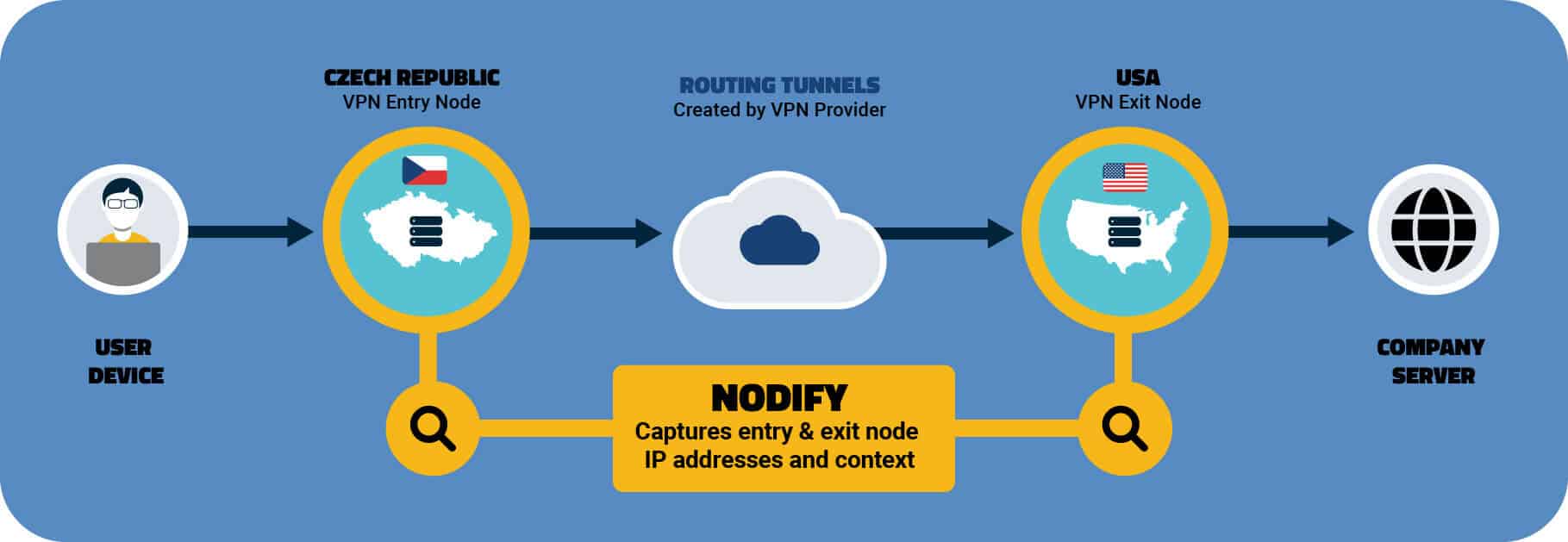
Moreover, we work continuously in developing new tools and relationships so that we can provide security teams with more data, insights and tools they need to keep their network and customer data secure. For instance, we recently announced enhancements to Nodify, our threat intelligence solution which provides critical context surrounding VPN traffic, enabling cybersecurity teams to understand the level of threat such traffic poses, as well as set policy around that traffic.
Education is critical to achieving our mission, and in that vein, our employees, recognized domain experts in the field, share their insights on emerging trends and security strategies by authoring white papers, presentations and articles for the benefit of the cybersecurity commission.
In the spirit of raising awareness around cybersecurity, we’ve collected some educational materials for you to access, including:
The Need for Proxy/VPN Data in Today’s Heightened Cybersecurity State. This white paper looks at the meteoric rise in VPN usage, the new classes of VPNs that have emerged and the risks they pose to corporate security. It also addresses how corporate security teams can apply rules to mitigate those risks.
Three Ways IP Data Can Enhance Cybersecurity, also by Jonathan Tomek, that provides practical steps security professionals can leverage IP data to improve their cyber security.
Cybersecurity is all of our concern, and we all play a role in promoting a safer, more secure and trusted internet. Together we can achieve those goals.
About Cybersecurity Awareness Month
Cybersecurity Awareness Month is designed to engage and educate public- and private-sector partners through events and initiatives with the goal of raising awareness about cybersecurity to increase the resiliency of the nation in the event of a cyber incident. Since the Presidential proclamation establishing Cybersecurity Awareness Month in 2004, the initiative has been formally recognized by Congress, federal, state and local governments and leaders from industry and academia. This united effort is necessary to maintain a cyberspace that is safer and more resilient and remains a source of tremendous opportunity and growth for years to come. For more information, visit staysafeonline.org/cybersecurity-awareness-month/
A Five-Part Blog Series to Bust the Myths Surrounding VPN Intelligence Data
No trend deserves the corporate security team’s attention more than the explosion of VPN usage, as well as the influx of VPN providers to the market.
The numbers speak for themselves:
By 2027, the total VPN market may reach $92.6 billion.
Consumers will contribute to the growth; per IDC, the market for consumer VPNs will double in size, reaching $834 million by 2024.
Countless people will attempt to access corporate systems and websites via a VPN service, forcing security teams to make decisions as to which are legitimate, which are suspect, and which are likely to have nefarious intentions.
In our first blog post of the series, we dispelled the myth that all VPN-driven data is the same. In this post we take on the myth that VPN breadth doesn’t matter.
Myth #2: VPN breadth doesn’t matter. Once you know the entrance IP addresses you have the VPN covered.
Fact: Google “VPN providers” and you’ll see plenty of Top 10 or Top 25 lists, few of which contain the exact same providers. How many VPN services are there exactly? It’s a difficult question to answer, but it’s probably somewhere in the thousands. With that many providers, breadth absolutely matters!
Let’s start with some basics. Not all VPN services are the same. Broadly speaking, there are four main types:
1. Commercial VPN aka Personal VPN
This is a service that’s geared to individual or personal use rather than business use. Personal VPNs are used to protect a home or office computers and devices from external attacks. They’re also used to circumvent geography-based restrictions to content. These can be used on mobile devices, laptops, and home routers.
2. Corporate VPN aka Remote Access
This is a service that allows employees who work remotely to access and use their employers’ corporate data, systems and applications. All traffic between the user and the corporate network is encrypted.
3. Private Relay
This is designed to enable privacy for an individual without allowing them to circumvent geography-based restrictions. The goal of these types of VPNs is to encrypt network traffic to prevent data snooping.
4. Site-to-Site VPN
This is a connection between two or more networks, such as a network within a corporate HQ and one in a local branch office.
Complicating matters further, VPN infrastructure can be quite broad with numerous entry and exit points that change frequently. For instance, a commercial VPN service allows a user to enter the VPN via a US-based IP address and exit it via an IP address that’s located in another country. This allows the user to bypass any geo-restriction policies — an action that you will miss if you have just the US-based point of entry IP address.
Keep in mind that there are many free and low-cost commercial VPN services on the market that offer simple interfaces that allow users to change the location of their IP addresses quickly and easily. In fact, many services offer this functionality as a key selling point.
This means that an employee can also use a personal VPN service from within your corporate campus to circumvent your internal company policies, such as one that bans streaming videos while in the office. Worse, a VPN can be used to exfiltrate internal data outside of the network — an event that security tools can’t always detect.
The bottom line: One IP data point — either the entrance or exit point — is like one hand clapping.
The Digital Element Difference: We are an IP address intelligence data provider that tracks both entrance and exit points of your traffic, which means we are the only company that can eliminate these blindspots for you.
Our breadth of data provides the context you need to protect your corporate network by establishing and implementing best practices about VPN traffic.
Next up: The common myth that covering the top 10 VPN sites provides sufficient protection. We look forward to giving you the whole story on this.
A Five-Part Blog Series to Bust the Myths Surrounding VPN Intelligence Data
It’s no secret that VPN usage is exploding. Driven by the pandemic and lockdown orders, consumers everywhere signed up for a VPN service in order to access content that was otherwise off limits to them. Others were keen to secure their privacy.
Today, some 1.6 billion people — about 31% of the world’s Internet users — rely on a VPN to surf the web and access apps anonymously.
That enormous pool of users is an irresistible draw for entrepreneurs, investors, consumers and nefarious actors who see an opportunity to cash in on the trend. There are thousands of VPN services (though most are owned by the same subset of parent companies). Obviously, a great deal of VPN usage is benign, but not all of it. For instance, the credentials of 21 million VPN users were stolen from just three VPN apps, SuperVPN, GeckoVPN and ChatVPN, and are now up for sale on the dark web.
Residential users aren’t the only victims, as the FBI has warned that cyber criminals are exploiting home VPN usage to break into corporate systems. Meanwhile, streaming companies and compliance teams have seen VPN users circumvent their geographical rights management and digital rights restrictions.
The crimes are both serious and costly given that many VPN providers are happy to turn a blind eye to the activities of their users, providing them with a gateway for a range of malicious activities, including scraping, scanning and testing passwords in order to access your network.
Today, corporate security and compliance teams must navigate treacherous waters. With remote and hybrid work models a permanent fixture, employees sign into their workspaces via the corporate VPN by day, and their personal VPN by night, exposing the company’s systems to unprecedented risk.
Security and compliance teams feel a tremendous urgency to get a handle on the VPN market so they can make smart decisions about which VPN traffic to allow, which to investigate, and which to ban altogether. To make those distinctions, however, they need context and insight. VPN intelligence data is essential. But not all VPN data is equally valuable; critical differences exist, and those differences can spell the difference between a hack that is cauterized quickly, and one that makes national headlines.
There are many myths about VPN data. In this five-part blog series, we examine those myths one at a time. First up: the myth that all VPN-driven data is the same.
Fact: No, Not All VPN-Driven Data is the Same
Too often we hear that “all VPN-driven data is the same.” The differences begin with where the data originates — the VPN provider itself — and its intentions when offering a service to the market.
For instance, some VPN services are built for securing an organization (e.g. Zero-Trust Gateways), while some are privacy focused (e.g. Google VPN). Some allow the user to determine his or her exit destination to circumvent restrictions (e.g. NordVPN) in order to bypass digital rights restrictions. This means that each and every traffic source must be evaluated in its own right to determine which is safe, potentially suspect, or outright nefarious.
Additionally, the breadth of data can vary from provider to provider. A lot of VPN intelligence data providers get their data from a limited scope of sources, such as gambling apps. This is a huge problem because it misses vast swaths of VPN usage. For instance, schools and universities require students to use their VPN to register for classes or pay their tuition. None of this traffic will be covered by a service that relies on limited sources for their main source of data.
Millions of people who are not gamblers sign up for a VPN service in order to circumvent digital access rights so that they can stream content outside of their geo-location (e.g. stream The Office via UK Netflix rather than pay for a Peacock TV subscription).
And there are corporate VPNs which convolutes things. Let’s say an employee is at her desk researching products for her job via your corporate VPN. When she visits a website outside your network, she will appear to that website as an unknown actor hiding behind a VPN. Is she a legitimate customer or a competitor seeking to steal company secrets? To make that determination, the security team for that website will need more context around your VPN itself, such as the company name, provider URL, and so on.
Here’s another example for why context is critical: you may consider all VPN traffic originating in Russia as suspect and block it automatically. But what if you have employees (or students, if you’re a university) traveling there for work or a study abroad program? You may block legitimate people from accessing your network based on broad brushstrokes.
The Bottom Line
There is no one “best source” of data to protect business interests. The datasets that are right for your industry depends on your sector, geo-location, users, employees, and a host of other factors. There is no one-size-fits-all.
The Digital Element Difference: We don’t rely on a single source for our IP address intelligence data. Rather, we tap into multiple sources to ensure we have no gaps. And importantly, we distinguish between different types of VPN traffic and provide context around each VPN to help security teams understand the user behind the traffic.
Our breadth of data provides the context you need to investigate and contain breaches, enforce digital rights management, as well as establish and implement best practices about VPN traffic.
Next up: The common myth that VPN breadth doesn’t matter. Once you have one IP, you have the VPN covered. We look forward to getting the facts straight on this one.
Today’s enterprise IT professionals are navigating a challenging cybersecurity environment. In many ways, the problem’s scope is stunning and alarming. For instance, ransomware attacks increased by 151 percent year-over-year in 2021, while phishing scams increased by 440 percent in a single month.
The escalating attacks come with a price. According to IBM’s Cost of a Data Breach Report 2023, the average cost of a data breach in 2023 was USD $4.45 million, a 2.3% increase from 2022’s cost of $4.35 million.
As a result, companies are increasing their cybersecurity investment, fortifying their defensive postures to avoid the financial expense, reputational damage, and productivity loss that inevitably follows a cybersecurity incident.
In the process, cybersecurity leaders and organizational decision-makers face difficult decisions as they allocate resources, invest in new solutions, and support their personnel. This is especially challenging as threat actors display remarkable agility, exploiting novel vulnerabilities and harnessing the latest technologies to wreak havoc on a company’s digital infrastructure.
However, by evaluating the latest technology trends, companies can get ahead of the next threats.
New Technologies Introduce New Threats
New technologies invite threat actors to invoke fresh tactics when launching ransomware attacks, infiltrating company networks, or illegally occupying consumer accounts. In a pandemic-stricken environment, many are leveraging camouflage techniques that allow them to operate anonymously from anywhere in the world.
Most prominently, virtual private networks (VPNs), proxy servers, queue networks, and domain name systems (DNSs) allow threat actors to operate with nearly total anonymity.
At the same time, many organizations have made VPNs, encrypted connections over the internet from a device to a network–through a single IP address, available to the employees, providing expanded access to company IT from anywhere in the world. Collectively, companies deploy VPNs for several reasons, including:
Ensuring general security, such as avoiding identity theft
Minimizing privacy concerns, such as securing personal data
Mitigating information exposure from public WiFi
Accommodating job-specific requirements
Meanwhile, more than half of VPN users rely on the technology to access region-restricted content from streaming services and digital platforms. Unfortunately, many users are downloading free VPN software to access this region-restricted content, and they’ve unknowingly had their residential IPs hijacked by these VPN providers.
When consumers download and sign up for a free commercial VPN, many agree to give the VPN provider the right to use their IP address in the entire proxy pool for routing purposes. While this clause is often hidden in the Terms of Service, it can have significant implications for cybersecurity.
Threat actors have found proxies to be an effective way to masquerade their malicious activity. Companies can’t prevent VPN users from accessing the internet, but this practice increases the risk of labeling customers or employees as threat actors while failing to detect or discover the root of cybercrime.
Incorporating IP Data for Protection
Simply put, it’s evident that companies need to develop the capacity to separate threat actors from genuine users. The ability to identify threat actors operating through a proxy enables companies to flag potential criminal activities, set protocols for handling this type of “non-human” traffic, and review post-action analytics.
By incorporating proxy and VPN data on the front-end of online security measures, companies can automatically flag IP addresses as suspicious and reject or block the incoming IP from connecting to their service, website, or network. In addition, proxy data can trigger variable fraud alerts that enable companies to differentiate authentic traffic from fraudulent activity more effectively.
Most importantly, success is predicated on data quality. Information reliability can vary significantly among data sources, but the most accurate proxy data providers ensure that this information is constantly updated and originates from excellent sources. The cybersecurity implications are far-reaching, including:
Government agencies can use IP-based VPN data to filter and identify safe VPNs.
Financial services and eCommerce platforms can incorporate proxy and VPN data to implement smart rules to verify consumer IP addresses automatically.
Managed security service providers can use proxy and VPN data as a foundational, front-line layer of fraud prevention and security enhancement.
To thrive in a shifting cybersecurity landscape, companies must continually equip themselves with the data and tools to protect their digital assets. Developing the capacity to analyze and respond to high-quality proxy and VPN data strips threat actors of their anonymity, making it one cybersecurity strategy that companies can’t ignore in the year ahead.
To get more information about using IP data to solve cybersecurity challenges for your organization, access our guide, “The Need for Proxy/VPN Data in Today’s Heightened Cybersecurity State” here.
The year 2021 was a bit of a tumultuous one for marketers. The global pandemic forever altered consumer behavior and the rules of digital advertising saw radical shifts, led by changes in privacy and the death of the cookie. But the digital advertising ecosystem is one that has been marked by drastic changes, and we have no doubt that marketers will find their way to thrive. In fact, we already see evidence of marketers, with the help of their partners, doing just that.
Here are the three trends we think will define the year ahead for digital marketers.
Privacy Regulations are Changing the Data Rules
Over the past 20 years, marketers relied on third-party cookies to identify likely prospects, provide them with relevant ads, and assess how well marketing campaigns performed. But that model has been under attack since 2018, when GDPR went into effect. In the U.S., California was the first state to adopt a consumer privacy law; Virginia and Colorado have followed suit.
It’s just the beginning. According to the National Conference of State Legislatures, at least 38 states introduced more than 160 consumer privacy related bills in 2021, sending a message to marketers everywhere that they need new tactics going forward. Many companies, including Digital Element, have solidified their commitment to privacy controls as a result.
Where the regulations drop off, Big Tech picks up. Not content to wait until privacy regulations apply to every citizen of the world, Apple and Mozilla have banned third-party tracking in their browsers. Google announced plans to follow suit, though when that will actually occur is anybody’s guess, as the company has postponed the date multiple times.
Neither the regulations nor the browsers are banning the use of first-party data, however, and throughout 2021 every major brand, across all sectors, began to pivot. Simultaneously, the industry has seen an influx of companies offering products and services to help brands harness their first-party data and deploy it for marketing initiatives.
That’s not to say that purchasing audience segments for targeting purposes will go away; many companies with data will still offer them up.
Ad Spend is Pouring into CTV
Americans have always watched a great deal of TV but lockdown changed the game. Digital TV viewing minutes shot up in 2020, and never came back down in 2021. In August 2021, a Roku/Harris Poll study showed that TV streaming has overtaken linear TV in terms of view time.
Marketers are keen to follow them there for the very good reason that people tend to be highly engaged while consuming TV content. It can also play a critical role in the purchasing journey, especially if advertisers can deliver a TV ad to consumers who read about their products on their laptops or smartphones.
But homing in on those audiences can be difficult for many reasons, including publisher reticence to share viewer data, and the need to link laptops, smartphones, smart watches and other devices to a particular user’s smart TV.
The IP address is a very good proxy for CTV, as every device connected to the Internet is assigned one. If you can associate a user’s smartphone, laptop and CTV IP addresses, you can plan customer journeys that span multiple channels, including TV.
ID Graphs Will Dominate Targeting, but Buyers Should Beware
The concept of ID graphs isn’t new; companies like LiveRamp have long relied on them to help marketers resolve the identity of their customers and prospects. Companies like Experian use them to help marketers reach their audience segments across devices.
What is new is the plethora of companies that have come to market with an ID graph solution. The sheer number of solutions speaks to the demand expected. Clearly, ID graphs are seen as a reliable way to target once the third-party cookie finally crumbles. But can we assume that all ID graphs are created equal? We suspect not, and that marketers will go through a learning process when selecting one that’s right for their needs. It also means that consolidation is inevitable, with the better (or better funded) solutions buying up the smaller ones.
Marketers will quickly realize the power of ID graphs, especially when they can layer in IP data into their segments. IP data is quite rich and nuanced, which will enable marketers to glean even more insights about their target audiences.
Looking ahead, marketers will spend 2022 learning about, testing and comparing emerging privacy-compliant strategies for building their customer bases.
On November 18, Digital Element’s parent company Digital Envoy announced a new initiative that enables non-profits and research-based organizations to leverage location data to help make the world a better place in material ways. The new program, Data for Impact, aims to identify opportunities where aggregated global location data can have a positive impact on humanitarian, economic and global events.
Digital Element’s IP geolocation data will play an important role in this initiative, giving non-profit and research-based organizations greater certainty in leveraging high-quality, privacy-conscious IP and geolocation data to solve real-world problems. Our precise, real-time geolocation data compliments data from our sister company, Outlogic, to enable program partners to have a powerful social impact where it is most needed.
Using Data to Solve Real Challenges We believe that if we can make a difference in people’s lives, then we are obligated to do so. In that spirit, Digital Envoy will make its data available to experts who can use it tackle humanity’s most difficult challenges, including:
Protecting human rights: The Data for Impact program will actively provide data and information vital in stopping human trafficking and promoting fundamental human rights.
Navigating nature: Information from heat maps has the ability to provide vital data in the case of natural disasters and global pandemics. Of note, this type of information has already produced a groundbreaking study on improving evacuation routes in advance of a natural disaster and on analysis regarding whether preventive COVID-19 measures are working and how the virus may spread.
Shedding light around economic uncertainty: Public policy, infrastructure and services are heavily dependent on data. The Data for Impact program will be working with organizations to identify new opportunities that can provide more effective sector and program prioritization, design, implementation, monitoring, and evaluation.
Some of the initial Data for Impact program partners include the COVID Alliance, MIT and The World Bank. We are proud of the material gains our data has already provided, and look forward to working with worthy organizations in the future.
Have a Need? If you represent an organization, or know someone who does, that would benefit from the Data for Impact program, please get in touch with Jake Ellenburg, Vice President of Communications at Digital Envoy, parent company of Digital Element.
Marketers are navigating a period of change. Apple and Mozilla have already blocked third-party tracking in their browsers, and Google is testing ways to limit cookies while letting users choose whether to allow them. With these shifts, how will you continue to target your audience accurately and measure campaign performance?
The answer is a resounding yes for a simple reason: Not all data stems from third-party cookies.
For instance, ubiquitous and persistent, IP data is highly valuable to marketers, and can be leveraged to improve targeting, assess inventory quality (e.g. detect fraudulent impressions), drive campaign performance, and attribute business outcomes to specific channels.
And when used in conjunction with your first-party data or other privacy-compliant data sets, IP data provides contextual signals about sessions and traffic.
Here are seven tips for leveraging IP data to enhance your initiatives as we move forward into a privacy-centric world.
How IP Data Supports Marketing in a Post–Third-Party Cookie World
As third-party cookies are phased out, marketers are rethinking how they identify audiences while maintaining privacy compliance. While IP addresses can be considered personal data in some contexts, they can still be leveraged in a privacy-conscious way. By focusing on aggregation, minimization, and purpose limitation, IP intelligence enables localization, security, and measurement without relying on third-party cookies.
This approach allows organizations to:
Use IP data at an aggregate or contextual level rather than tracking individuals
Limit data collection to what’s strictly necessary for a given purpose
Support compliance with modern privacy regulations and consent frameworks
IP data enables marketers to maintain granular audience insights such as location context, connection type, and network environment without tracking individuals across the web. This makes it a valuable solution for personalization, fraud prevention, and analytics in a cookie-restricted ecosystem.
Tip #1: Make data a priority at your organization/build a data-driven culture
Data will always be the key to better understanding who your prospects and customers are, segmenting them into distinct personas, as well as gaining insight into their customer journeys.
IP data is especially helpful in improving targeting, attribution, and analysis while complying with existing and emerging privacy regulations. For instance, you can leverage IP addresses to uncover quite a bit of insight about your audiences, including their geolocation (country, city, postal code), whether they’re a home or business user, if their IP is associated with a suspicious proxy connection, their business name, and more.
These data points will help ensure you’re targeting the right audience, as well as assess the markets that deliver the most success for your campaign and products.
Tip #2: Discuss your company’s objectives to determine the type of data you’ll need to meet them
The types of data required for your marketing initiatives and advertising campaigns should align directly with your company’s key objectives. For example, if your goal is to verify that your advertising spend reached real humans rather than bots, you’ll need to go beyond and in tandem with IP geolocation data.
Effective ad fraud detection typically combines:
Proxy, VPN, and hosting signals
Behavioral and anomaly detection patterns
Verification through trusted ad measurement partners
Similarly, if your goal is to verify ad quality, auditing ad clicks ensures that your messaging is served to the correct audience segment. Specific datasets are available to help you refine a variety of use cases. From delivering localized content that improves the customer experience, to gathering insights that enhance operations and campaign performance.
What information can marketers derive from IP Intelligence?
While IP data is often associated with geographic location, modern IP intelligence provides a much broader set of insights that help marketers understand user context.
Connection type (residential, mobile, corporate, hosting)
Carrier and ISP information
Network ownership and organization
Geographic resolution (country, region, city, postcode)
Proxy and VPN indicators
Business vs. residential usage patterns
Together, these signals help businesses determine whether a user is likely accessing content from home, the office, or a mobile environment, enabling more accurate targeting, messaging, and fraud detection.
Tip #3: Examine which data you currently collect and integrate (or not) to identify gaps
Most companies have been building their pools of first-party data gathered from multiple customer touchpoints, including their websites, social media, campaign landing pages, customer care portal and so on. While these touchpoints provide a plethora of data, they don’t always provide the full context you need. If you’re not also leveraging IP data you will inevitably confront gaps in your insights, which can negatively affect your initiatives.
IP data enables you to:
Gain detailed and nuanced insights that you can deploy to improve campaign metrics. For instance, you can target audiences by geolocation and other data to improve results. Let’s say you’re a brick-and-mortar store and your campaign goal is to drive in-store foot traffic. IP data lets you answer the question: what is the optimal distance from an outlet to encourage in-store visits by new customers?
Create contextual or aggregated audience segments that support privacy-conscious marketing and allow you to measure campaign incrementality; optimizing performance without tracking individual users.
Manage distribution of online content, ensuring that licensing and agreements are adhered to, and that the right customer or prospect is always presented with the right content.
These are just a few of the ways that IP data can be deployed; there are many others.
Tip #4: Determine breadth and depth of the datasets needed
IP data is highly varied and provides you with many options. The breadth and depth of the datasets you’ll need will be driven by your business needs. Some of your available options include:
VPN & Proxy Identification
This data helps you to detect and prevent malicious IP address masking, and enables greater control over the distribution of your digital content.
Carrier Data
This data enables stronger targeting of mobile users based on ISP, mobile carrier, mobile country code, and mobile network code information.
Additional Insights from Extended Databases
These datasets provide a wealth of insight into users, and their likely interest in a product at a specific moment in time. For instance, a user may have little interest in a CPG product while at the office, but a keen interest while at home.
These extended databases include:
Autonomous System Number (i.e. routing prefixes)
Demographics
Language
Time Zone
Domain Name
Organization Name
SIC/NAICS Codes
Home/Business types
Core Based Statistical Area (CBSA)
Location Data
Location data helps you make strategic decisions in the online world. For example, it affects the way you price and promote your products; it shapes the way you reach out to your target audiences; it is used to analyze the attributes of consumers within a particular area; and it places restrictions on the way you conduct business due to laws and regulations in a given area.
Tip # 5: Evaluate whether or not you need to bring in a data partner
The best way to assess whether or not you need a data partner is to ask yourself very specific questions:
Do you have access to the full range of data that you’ll need to:
Deliver highly localized content
Verify ad spend
Optimize advertising yield
Perform robust analytics
Ensure legal compliance
Prevent fraud and enhance security
Network routing to optimize content delivery
And more…
Does your team understand all of the use cases and potential applications of the data?
If you’ve answered no to any of these questions, it’s likely you will need a data partner.
Tip #6: Conduct due diligence on data partner in terms of data quality, accuracy, reliability, updates, customer support, and ease of deployment
The goal of due diligence is to whittle down potential vendors to consider. You can conduct quite a bit of your due diligence prior to contacting any vendors.
Ultimately, you want a partner who is an established industry leader, deploys unparalleled data collection practices, excellent methodologies for classifications, and has formed strategic partnerships with external or third-party data providers to enhance the data.
When conducting due diligence, ask:
What industry firsts (i.e. innovations) can the company claim? You want a data provider that’s a pioneer in the industry, and can respond to emerging trends and opportunities in time to provide you with a competitive advantage.
Do they have defensible methodology? Patents or other breakthroughs are a sign that the company has a culture of innovation, and it means you’ll get access to high-quality, trusted data
What is the breadth of the data? Is it global? Digital Element is the industry-leading provider that has accurate, global postcode-level coverage, as well as zip+4 in the U.S. The benefit of digital targeting is that it allows you to home in on your entire audience, but you can’t do that without access to accurate data on a global scale.
Is this company the “gold standard” of its sector? You want to partner with the best quality, most forward-thinking data provider as you move forward in the privacy-centric world.
Tip #7: Vet vendors
At the end of your due diligence process you’ll have a list of vendors under consideration. Now it’s time to vet them so that you can make the best decision for your needs.
Proper vetting requires you to ask very specific questions, as the results of your initiatives will only be as good as the quality of the data you use.
Specific questions to ask include:
How do you collect data? Is it anonymous and inherently privacy compliant? Do you collect PII data that must ultimately be scrubbed out? Do you store personal data?
How often is your data refreshed? There’s no sense in targeting users who’ve already converted or sent signals they’re not interested in an advertised product or service. For this reason, Digital Element’s data is updated 24/7 and released weekly.
How is your data validated?
How accurate is your data in terms of percentage of audience?
How easily can your data be deployed? Will my company be able to integrate it into our systems quickly and easily?
Are you willing to collaborate with us? Answer questions for our clients?
The world of data is changing for marketers, but in many ways, it is changing for the better. With the right partner, and the right datasets, marketers can thrive and win new customers in the emerging privacy-centric environment.
Frequently Asked Questions About Using IP Data in Marketing
How does IP data replace third-party cookies?
IP data provides contextual insights that can support privacy-first targeting and analytics when used responsibly.
Can IP data tell if a user is at home or at work?
Yes. Connection type, ISP data, and network ownership help distinguish residential, corporate, and mobile environments.
Is IP-based targeting privacy compliant?
When used responsibly and at an aggregate level, IP intelligence supports privacy-first marketing strategies.
Learn How IP Data Strengthens Modern Marketing Strategies
As marketers adapt to a privacy-first, post–third-party cookie landscape, IP intelligence offers a reliable way to understand audience context, protect ad spend, and deliver more relevant experiences without relying on individual-level tracking.
Our Digital Element team provides accurate, privacy-compliant IP data that helps marketing teams improve targeting, detect fraudulent activity, drive in-store engagement, and manage location-based content with confidence.
Global streaming viewership has been exhibiting healthy growth, with a projected growthby 8.27% (2024-2027) resulting in a market volume of US$137.70bn in 2027.
For viewers, the convenience of choosing what to watch, when they want is very compelling. However, so is the proliferation of premium content available through increasingly popular OTT services such as Amazon Prime’s Subscription VOD (SVOD) that provides content not available elsewhere for a competitively low cost.
This programming revolution has gone hand in hand with the explosion of devices that are capable of streaming high-quality video. Better quality mobile screens, the proliferation of low-cost data plans, and the increasing number of Wi-Fi hotspots are all fueling this growth. People are no longer viewing through a single TV in their households. They can access content through a variety of tablets and smartphones wherever they want.
This new video landscape presents some interesting challenges for broadcasters. As people are watching more content on multiple devices while on the move, broadcasters have to be mindful of compliance with licensing, copyright agreements and cultural differences. Broadcasters need the ability to grant access where viewing is permissible and restrict access where it is not, all while making the end user experience as seamless as possible.
IP Data is Vital for Content Providers
In a market where legislation and rights can rapidly change, the serving of content to the right user is far from simple. And, the consequences for not protecting assets can adversely affect revenues, produce costly penalties for non-compliance, and damage a brand’s reputation for blocking access when it should be allowed.
IP data is vital for content providers to comply with digital rights licenses, either at a country or regional level. Yet, many are using poor approaches that restrict users who should be able to view content, while allowing access to those who should not.
The deployment of accurate IP Intelligence and geolocation technology negates this issue because it accurately identifies the user’s location. Working with less accurate data providers can create false restrictions, leading to disgruntled consumers.
Additionally, accurate IP-derived connection speed data helps ensure streaming content is optimized for the viewing platform and aids in eliminating the technical problems associated with delivering video or music over a range of devices and connectivity types.
Intelligently Managing Web Traffic and Localizing Content
Content providers often cater to global audiences when delivering streaming, news, ecommerce and gaming services. This makes tailoring content to specific locations crucial for delivering the best web experiences for their users.
Being able to feed IP intelligence into content delivery operations means you can offer personalized, location-specific content experiences while managing global web traffic levels intelligently. Granular, location-based control over content delivery enables content localization, enhanced analytics and the ability to manage access and digital rights in line with national regulations and traffic patterns.
Varnish Software has partnered with Digital Element to deliver IP intelligence that’s integrated into caching technology, for enabling ultra high speed delivery of personalized, location-based web content.
Varnish Enterprise powers content delivery and streaming for some of the world’s largest streaming services and websites, such as Hulu, Twitch, CBC and Sky. Its pioneering caching technology puts content closer to users while protecting critical infrastructure from the effects of huge demand.
As the leading caching technology stack for enterprises, Varnish Enterprise brings unparalleled performance, resilience and flexibility to content delivery operations such as live streaming, video on demand and dynamic web pages. Integrating the industry’s most accurate geolocation data provides an easy-to-use and always up-to-date service that you can query to retrieve location information linked to an IP address.
To get more information on solving the streaming conundrum for your company, access the guide “IP Intelligence and the Digital Broadcast Revolution” here.
Today’s marketers need to show how their products and services are relevant to consumers―at different times and in different places throughout the day. However, creating that relevance requires data―and lots of it―many times from multiple sources. The “State of Marketing Report 2020” indicates that the median number of data sources used by marketers in 2019 was 8, is expected to grow to 10 this year, and projected up to 12 by 2021. Sourcing, aggregating, integrating and applying data from different providers can be a monumental challenge.
However, 51Degrees is an innovative company that has literally created a “one-stop shop” for real-time data with its Pipeline API. Founded in the United Kingdom, 51Degrees is the only commercial open-source, device-detection solution available. Leaders in ad tech, publishing, content management platforms, digital agencies and more than 1.5 million* websites, including global brands such as eBay, Sitecore, Opentext, Tencent and HSBC, use 51Degrees.
51Degrees is using reverse geocoding technology to convert the raw coordinates from latitude and longitude data derived from mobile devices into more useful geographical intelligence such as postcode, city, region, and country information. This “translated” data can then be used to provide more contextually and locally relevant advertising and content for on-the-go mobile interactions.
“We were delighted to integrate the Digital Element GeoMprint location solution for the launch of our new real-time data pipeline. Digital professionals can add location data to analytics, address capture and targeting systems.” said James Rosewell, CEO and founder of 51Degrees. “Setup takes a matter of minutes using the free-trial options. The permissively open source APIs make enhancements and audit super simple.”
Read the full press release to learn more about how to improve insights into online user preferences and device-specific behavior with geolocation technology…or jump right in and sign up for a free trial of the 51Degrees pipeline here.
*Numbers accurate at time of publication, but may be higher.
Travel behavior has evolved dramatically over the past few years. While the height of the Covid-19 pandemic disrupted global mobility, the long-term impact has been a shift toward more regional, flexible, and digitally coordinated travel. Today, travelers move fluidly across borders, switch devices constantly, and rely heavily on online research before booking.
For travel, hospitality, and retail marketers, this makes accurate IP geolocation and location-compliance intelligence more critical than ever, especially for brands trying to reach travelers at the right moment without accidentally blocking legitimate users or misdirecting spend.
Below, we explore how modern IP intelligence helps businesses target regional travelers, prevent abuse, personalize experiences safely, and protect campaign accuracy in an increasingly dynamic digital landscape.
Domestic and near-home travel still represents a major share of trip volume. People planning weekend getaways, reunions, or short-haul business trips often search for travel options within driving distance or regional flight paths.
To capture these high-intent users, marketers rely on precision geolocation, particularly city- and postal-level accuracy, to deliver highly relevant experiences. This includes timely hotel and lodging promotions, offers for nearby attractions, retail and restaurant deals close to key points of interest, and regionally tailored travel messaging such as “Book your long weekend escape” or “Explore your nearby national parks.”
Brands that align their targeting radius with real traveler behaviors consistently outperform those taking a broad national approach.
Using Geolocation in Today’s Travel Marketing: What’s Different Now
Modern geolocation strategy is no longer just about identifying who is nearby.
Instead, it focuses on recognizing legitimate users even as they travel, detecting anomalous or mismatched regional signals, and personalizing content without exposing personal information. At the same time, it helps reduce ad waste caused by location spoofing and ensures compliance checks are met before high-risk actions like logins, transactions, or bookings occur.
This is where premium IP data, like Digital Element’s NetAcuity®, directly supports both marketing performance and security posture.
Key Challenges Travel Brands Face & How IP Intelligence Solves Them
1. How can companies detect mismatched region settings without blocking legitimate travelers?
Travelers frequently hop between hotel Wi-Fi, mobile networks, airport hotspots, and VPN-enabled workplaces. This leads to mismatched device region settings.
By using IP-level signals such as:
Connection type (mobile, residential broadband, corporate network, public Wi-Fi)
IP address persistence and recent geographic consistency
Carrier identification and mobile roaming indicators
Network type classification (e.g., proxy, VPN, hosting provider)
Autonomous System Number (ASN) and network owner context
…travel brands can flag suspicious discrepancies while still allowing legitimate travelers through.
Example: A user’s device time zone is set to Germany, but they appear on a U.S. airport Wi-Fi. NetAcuity can validate that the IP belongs to an airport AS (Autonomous System) and treat this as expected traveler behavior, not fraud.
2. How do you stop region bypass via residential proxies without banning actual travelers
Residential proxy routing is a growing challenge because it mimics “normal” user behavior.
The solution is layered IP intelligence:
Proxy and VPN identification
Network type and address context (residential, hosting, mobile, corporate)
Contextual IP address history and observed usage patterns over time
Velocity of IP location or network changes
Connection method indicators (mobile vs. fixed broadband vs. data center)
With this combined view, brands can differentiate a real traveler on hotel Wi-Fi from a user intentionally spoofing their location through a residential proxy or VPN exit node.
This prevents misuse (like circumventing regional pricing or booking restrictions) without harming good customers.
3. What’s the best way to pre-screen location compliance before login or checkout?
A standardized approach often includes:
Identify country + region via IP
Check for anonymizers or proxies
Validate expected travel corridors (e.g., mobile carrier roaming)
Serve region-appropriate login or product options
4. Which IP fields help personalize homepage content safely?
Brands want dynamic content, but must avoid personal data. IP geolocation remains one of the strongest privacy-friendly ways to do this.
Useful fields include:
Country and region for compliance and language settings
City/postal code for local offers
Connection type to adjust content for travelers vs. residents
Point-of-interest proximity for hotels, attractions, retail, etc.
Because IP data is non-PII, it helps create personalization without relying on cookies or user accounts.
5. How do you validate geo for campaign measurement and avoid off-target impressions?
When campaigns rely solely on self-reported location (GPS permissions, browser settings, etc.), impressions often land far outside the intended region.
Marketers use IP intelligence to:
Verify that an impression truly came from the campaign’s target region
Detect impressions delivered through VPNs or proxies
Identify fraudulent or mismatched location claims
Reduce wasted impressions and improve ROAS
Example: Accurate pre- and post-bid geolocation ensures that a Denver hotel is actually reaching users in Colorado, and not someone appearing to be “in Denver” via a misrepresented IP route.
Why NetAcuity® Outperforms Publicly Available IP Data
Not all IP datasets are equal.
Public or low-cost IP sources often suffer from:
Stale updates
Sparse location coverage
Inaccurate or unavailable city-level data
Poor detection of proxies, VPNs, and hosting networks
Digital Element’s NetAcuity® stands apart with:
Postcode-level granularity, globally
Advanced proxy, VPN, and residential proxy detection
Support for Carrier-Grade NAT (CGNAT) detection
Unparalleled IP address and network context
Industry leadership with more than 25 years of IP geolocation expertise
For travel, hospitality, retail, and tourism brands competing for attention, this level of accuracy enables geotargeting that is both effective and trustworthy.
Geolocation Is Essential to Today’s Traveler Journey
Travelers expect regionally relevant experiences whether they’re researching at home, browsing on the move, or logging in from multiple networks. With advanced IP geolocation and location-compliance intelligence, businesses can deliver precise regional messaging, personalize content without compromising privacy, detect spoofed or mismatched locations, and avoid unnecessary blocking that erodes trust. As domestic and regional travel continue to grow, geolocation remains a critical tool for reaching travelers in authentic, compliant, and measurable ways.
Ready to strengthen your location strategy?
Explore how Digital Element’s IP intelligence can help you deliver more accurate targeting, reduce risk, and improve customer experiences across every traveler touchpoint. Contact our sales team for a personalized consultation or browse our resource library to learn more about geolocation, compliance, and data-driven traveler engagement.
Key Takeaways
Accurate IP geolocation is essential for reaching local and regional travelers, enabling contextually relevant marketing without relying on personal data.
Location signals help distinguish real travelers from users spoofing their location, reducing fraud while preserving access for legitimate customers.
Pre-screening location before login or checkout improves compliance and user experience, allowing brands to catch inconsistencies early without adding friction.
IP-based fields—like region, city/postal code, and connection type—enable privacy-safe personalization, making homepage content more useful without tracking individuals.
Advanced IP intelligence prevents wasted ad spend by validating that impressions truly come from the intended geography and not from proxies or mismatched settings.
Premium datasets like NetAcuity® deliver higher accuracy, reliable proxy detection, and continuous updates essential for real-time decisioning.
Geolocation remains one of the strongest tools for understanding traveler behavior, especially as users move across networks, devices, and regional contexts.