Since commerce has gone online, marketers have relied on IP addresses for targeted marketing campaigns. In today’s competitive marketplace, the ability to target marketing efforts with precision is more critical than ever.
Since 1999, Digital Element has been helping marketers target their audiences precisely by postal code globally. This level of detail not only enhances the effectiveness of marketing campaigns but also drives higher conversion rates and better ROI.
While postal codes are granular, advertisers are always eager for even more precise data to gain deeper insights and improve performance of their targeted campaigns, and Digital Element has the answer.
A Deeper Understanding of Your Marketing Campaign
For census and planning purposes, many countries have created standardized geographic areas in addition to postal codes. These alternate areas help governments collect and analyze population data, but they also unlock valuable opportunities for marketers who need more precision than postal codes alone can offer.
In Australia, for example, these areas are known as Statistical Areas Level 1 (SA1), defined by the Australian Bureau of Statistics (ABS). SA1s are designed to be relatively small and consistent in population size—typically between 200 and 800 people, with an average of about 400.
SA1s represent the smallest unit in Australia’s statistical area hierarchy. Other countries use similar systems, such as PLZ8 regions in Germany and IRIS zones in France.
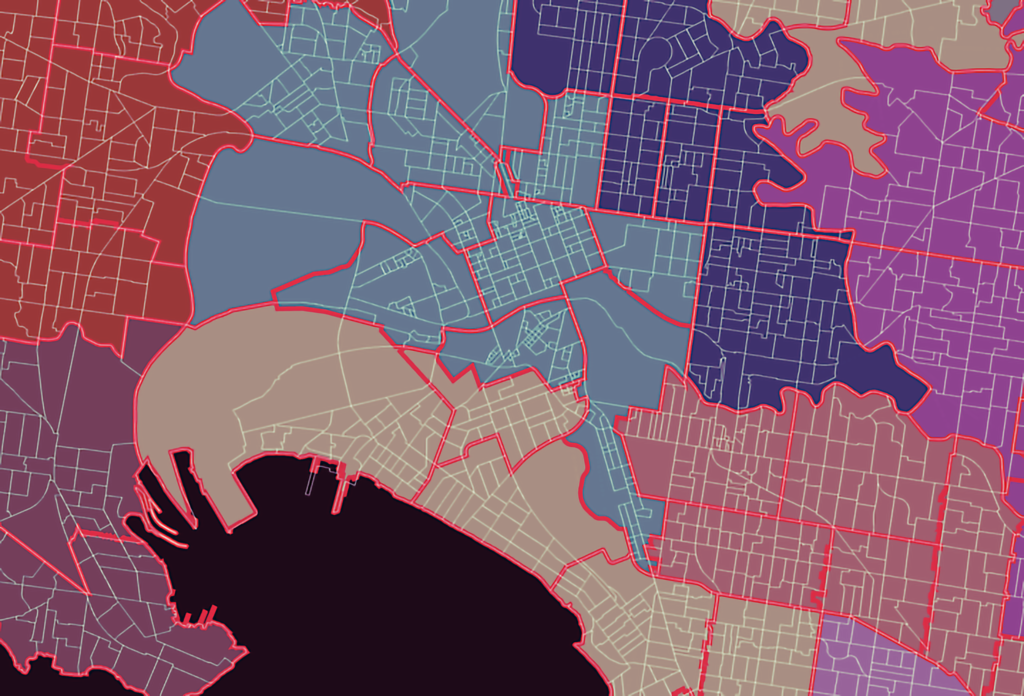
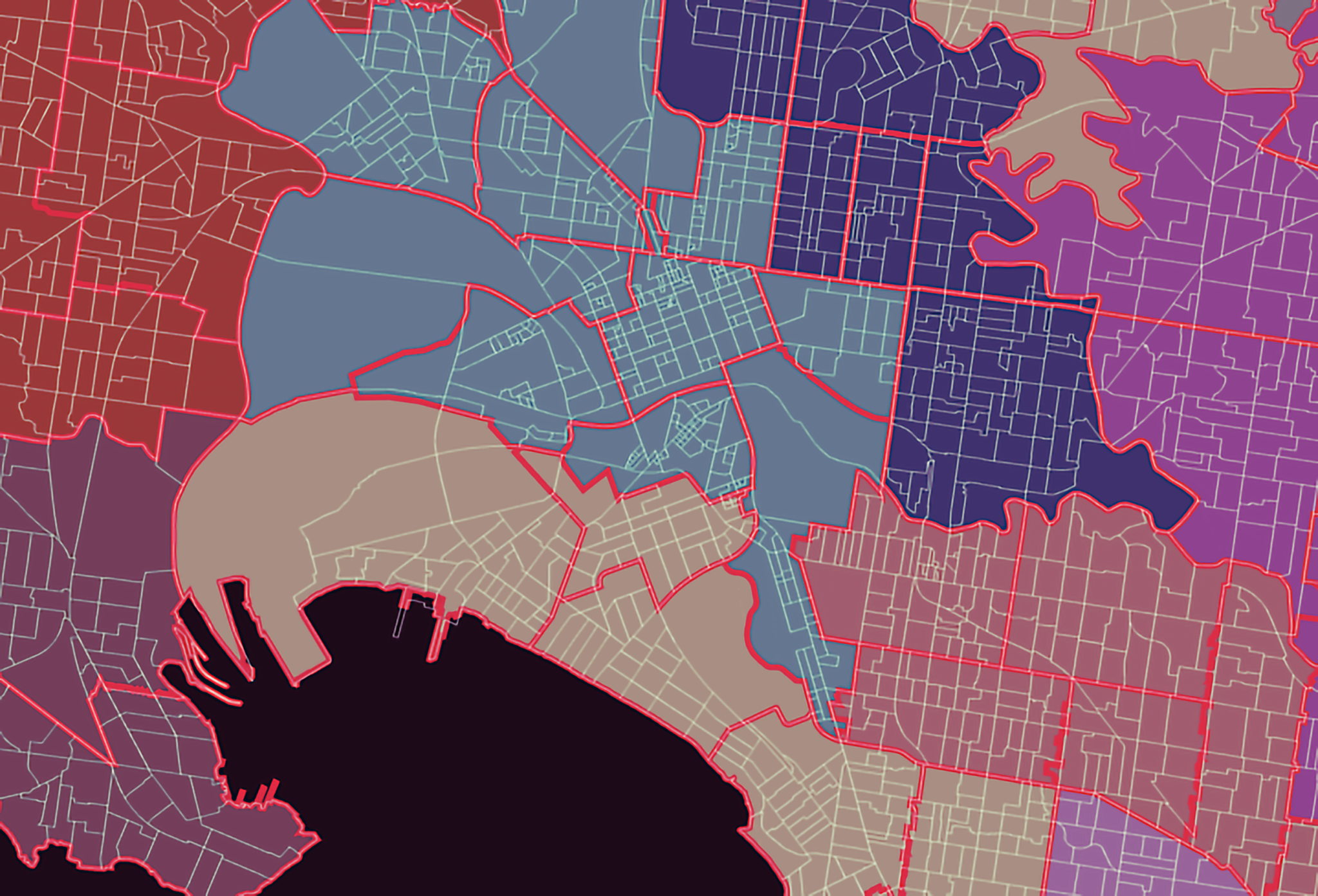
In the image above, the red lines show the postcodes in Melbourne, Australia and the white lines are SA1s.
Traditional postal codes in Australia can be quite broad, often covering multiple towns or large urban populations. There are approximately 3,333 postal codes nationwide. By comparison, the number of SA1s expands to more than 61,800 distinct areas.
In metro Sydney alone, a single postal code can contain as many as 40 individual SA1s. Each SA1’s smaller footprint enables more accurate targeting and more meaningful insights—without narrowing data down to an individual level.
This balance is critical. SA1s are granular enough to support detailed analysis and localized engagement, yet large enough to preserve anonymity and protect privacy. By focusing on smaller, more defined geographic units, companies can deliver personalized content that resonates with the right audience, at the right time, in the right place.
Why This Level of Granularity Matters in a Cookieless World
As third-party cookies continue to disappear, marketers are relying more heavily on signals that do not depend on personal identifiers. IP-based geolocation has emerged as a durable alternative because it enables geographic relevance without tracking individual behavior.
By working at the level of postal codes, cities, or alternate areas like SA1s, brands can:
- Localize messaging and offers without cookies
- Maintain reach and scale across browsers and devices
- Support privacy-compliant advertising strategies
This makes geographic intelligence especially valuable for campaigns where relevance is tied to where someone is, not who they are.
1. Get More Granularity without Sacrificing Privacy
Digital Element is taking IP-based location targeting to the next level with the introduction of its new Alternate Area Database.
This innovative feature maps IP addresses to individual SA1s in Australia, providing more precise geographic data by aggregating IP addresses from specific areas smaller than traditional postal codes. By leveraging these detailed geographic boundaries, companies can enhance the granularity and accuracy of location-based data without compromising privacy.
The Alternate Area Database can be licensed as a standalone product or in conjunction with NetAcuity’s 18 other databases for more detailed insights.
2. Supporting More Accurate Targeting, Measurement, and Localization
With access to Alternate Area data, marketers can refine how they use location intelligence across multiple use cases.
For advertising and marketing, this means serving campaigns that are more closely aligned with local context, reducing wasted impressions and improving relevance at the neighborhood or community level.
For content and commerce experiences, alternate area data supports automatic localization. Product catalogs, pricing, language, subtitles, and regulatory messaging can adapt dynamically based on estimated regional location, without requiring logins or persistent tracking.
For analytics and measurement, greater geographic precision improves confidence. When campaigns are evaluated using consistent, deterministic location signals, marketers can better understand performance by region even as traditional cookie-based attribution becomes less reliable.
3. Designed to Complement Verification and Measurement Partners
NetAcuity’s Alternate Area Database is designed to work alongside existing verification, fraud prevention, and measurement solutions, not replace them.
By adding a stable, privacy-safe geographic signal, it helps preserve campaign scale and consistency as cookies fade, while enhancing the overall quality of location-based insights. This makes it a strong foundational layer within modern, privacy-first advertising stacks.
Looking Ahead: Expanding to France and Germany
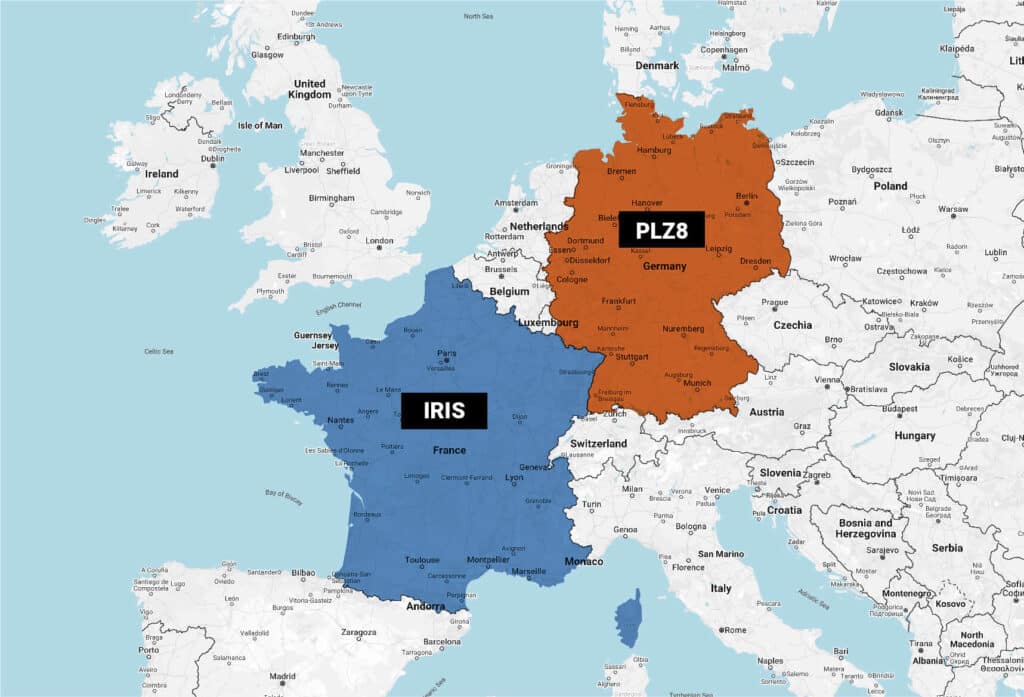
The introduction of the Alternate Area Database in Australia is just the beginning. NetAcuity plans to extend this feature to other regions, including Germany and France. In Germany, the focus will be on PLZ 8 regions, and in France, the IRIS system will be utilized. These expansions will further enhance the granularity and accuracy of IP geolocation, providing valuable insights and targeting capabilities across Europe.
Revolutionizing IP Geolocation for Smarter Marketing
NetAcuity’s Alternate Area Database represents the next evolution of IP-based geolocation. By mapping IP addresses to smaller, well-defined geographic areas, it empowers businesses to make more informed decisions. Whether it’s for precise ad targeting, in-depth demographic analysis, or enhanced cybersecurity, the ability to map IP addresses to smaller, more accurate regions like SA1s unlocks new potential while maintaining alignment with Digital Element’s privacy-centric approach.
As this capability expands globally, it will continue to open new possibilities for brands that need precision, performance, and compliance in a cookieless digital environment.
Learn More About Our Portfolio of Products
For more info on our capabilities, check out the resource center or reach out to support@digitalenvoy.com.